

Best Live Betting Odds Today: Real-Time Sportsbook Odds & Live Betting Lines
Why live betting odds are critical when you wager in-play
When a game starts, the market shifts quickly. You need live betting odds because they reflect what’s happening on the field, court, or ice in real time. As you follow a match, momentum swings — injuries, substitutions, time left, and sudden scoring runs — all change probabilities instantly. By understanding live lines, you can react to value opportunities that pregame markets missed or protect your bankroll when the market moves against you.
In practical terms, live odds give you two advantages: timing and information. Timing lets you strike when bookmakers lag behind the most likely outcome, and information helps you interpret subtle in-game signals (e.g., a goalkeeper visibly hampered or a team switching tactics). You’ll learn to spot when a line is slow to adjust and when it fairly prices immediate risk.
What you should focus on in the first minutes of a live market
- Game context: Who’s leading, injury status, and visible momentum. Early indicators often predict short-term line moves.
- Line latency: Different books update at different speeds. You’ll want the ones with the lowest latency for fast markets.
- Market liquidity and limits: Heavy markets (major soccer leagues, NBA, NFL) usually absorb larger bets without huge price moves, while niche markets move quickly on small stakes.
- Bet types: Moneyline, spreads, totals, and live props behave differently. Props can be volatile and occasionally mispriced after unusual plays.
How real-time sportsbook lines are generated and how you should read them
Live lines are driven by two sources: automated models and trader adjustments. Models ingest event data (possession, shots, time remaining) and calculate probabilities many times per second. Human traders intervene when an unusual event or market imbalance occurs. As a bettor, you must read the odds format (American, decimal, fractional) and translate implied probability to determine value.
For example, American odds of -150 imply a probability of roughly 60%. If your assessment — based on current match conditions — suggests the true probability is higher than the implied probability, you’ve found value. Keep in mind the vig (bookmaker margin) reduces expected returns, so compare across several sportsbooks to find the best net price.
Useful tools you should adopt include odds aggregators, line history charts, and alert systems. Aggregators show multiple live lines side-by-side so you can identify the best price. Line history helps you see how quickly a market moved after key events, which is essential when timing an in-play bet.
Next, you’ll learn concrete strategies for comparing live odds across sportsbooks, setting up alerts, and executing low-latency bets to capture the best prices before they vanish.
Comparing live odds across sportsbooks and prioritizing the best lines
Line-shopping in-play is less forgiving than pregame — prices can evaporate in seconds — so you need a disciplined approach to compare books quickly and act. Start with an odds aggregator that displays multiple books side-by-side and includes line history. That gives you immediate visibility of where the best available price sits and how fast each book adjusted after a recent event.
- Know which books are fastest for which sports: Not every sportsbook reacts the same. Some are optimized for US pro leagues, others for European soccer markets. Keep a short list of the three fastest books for your preferred leagues and load them first.
- Prioritize net price, not raw odds: Take into account juice, limits and the probability you can actually get the bet filled. A slightly worse-looking price on a book with larger limits and lower latency may be preferable to the sharp price that locks up on low-limit accounts.
- Watch for steam and overreactions: When several books move simultaneously, the market may be following a large public or sharp ticket. Quick identification — using line-history spikes — helps you decide whether to fade (if it’s public overreaction) or join (if the move corrects a prior misprice).
- Use account diversity strategically: Maintain accounts at multiple books and keep them funded. That avoids transfer delays and lets you capture the best price immediately instead of settling for the next-best option.
Setting up alerts and executing low-latency bets
Speed is infrastructure as much as skill. Alerts and execution workflows bridge the gap between spotting value and getting matched at that price.
- Real-time alerts: Configure push alerts for line thresholds, price moves, or specific in-game events (red cards, injuries, time windows). Use aggregator alerts for price changes and combine them with play-by-play notifications from the official league feed or a trusted data provider.
- Optimize connectivity: Use a wired ethernet connection on desktop when possible; Wi‑Fi or cellular can introduce unpredictable latency. Close unnecessary apps and tabs to reduce CPU/network load. If you rely on mobile, pre-open the specific market pages in each app for instant access.
- Execution workflow: Adopt a one-touch mentality. When an alert hits, decide immediately: place the stake, hedge an existing position, or ignore. Use saved bet slips and preset stake sizes to avoid manual entry delays. If you use a third-party tool or API, automate the order placement but keep a manual override for unusual circumstances.
- Understand bet acceptance mechanics: Some platforms accept bets subject to a short verification window; others auto-reject when lines change. Know each book’s behavior so you can anticipate partial fills, voids, or reoffers.
Sizing, hedging and practical bankroll rules for in-play action
Live betting is higher variance than pregame due to rapid information shifts. That requires conservative sizing and clear hedging rules.
- Reduce sizing relative to pregame: Many pros recommend cutting typical stake sizes by 25–50% for in-play because of increased noise and market latency. If you use Kelly, apply a fractional Kelly (e.g., 1/4 Kelly) when betting in-play.
- Set maximum exposure per event: Limit total money at risk on a single game to a small percentage of your bankroll (commonly 2–5%). This prevents catastrophic loss from a single volatile swing.
- Hedging discipline: Hedge to lock guaranteed profit or cap downside only when the hedge improves your expected return relative to variance. Don’t hedge reflexively; calculate whether the reduced payout justifies lowering risk.
- Track and review: Maintain a live-betting journal with timestamps, odds, stake, outcome and the rationale for each bet. Post-game review reveals systematic edge or recurring mistakes (late reactions, chasing losses, poor book selection) so you can refine rules.
Putting live betting into practice
Now that you know how live lines move and how to act, the next step is execution. Start small: set up your accounts, add an odds aggregator, configure alerts for the markets and thresholds you trade, and practice a conservative staking plan for several dozen events before increasing size. Prioritize low latency (wired connection, pre-open markets), maintain diversified books with balances ready, and keep a disciplined journal to separate skill from variance. Over time, focus on process improvements — faster execution, smarter hedges, and tighter selection — rather than chasing immediate results.
Frequently Asked Questions
How quickly should I place a live bet after seeing a value opportunity?
Act within seconds when you identify clear value; markets can adjust in that time. Use saved bet slips, preset stakes, and fast connectivity to minimize delay. If you can’t execute quickly and reliably, mark the opportunity for later review rather than chasing it slowly.
Which live bet types tend to offer the most exploitable value?
Volatile markets often present the best short-term edges: certain live props (especially after unusual plays), totals during momentum swings, and moneyline/spread opportunities immediately after key events. Liquidity matters—major leagues absorb larger stakes—so choose markets where your expected stake fits the book’s limits.
What concrete steps reduce latency and improve fill rates?
Use a wired ethernet desktop when possible, pre-open market pages in each app, close unnecessary programs, and fund multiple sportsbook accounts in advance. Configure aggregator and play-by-play alerts so you don’t rely on manual monitoring. Finally, learn each book’s acceptance behavior (auto-rejects, verification windows, partial fills) and tailor your execution strategy accordingly.

Related Posts
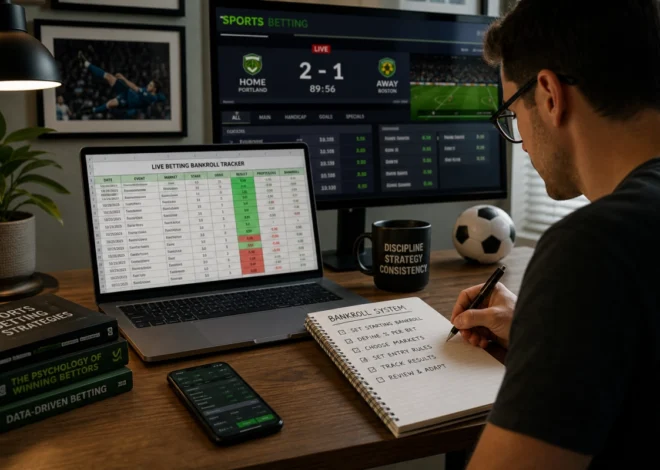
A Practical Step-by-Step Guide to Building a Repeatable Live Betting Bankroll System
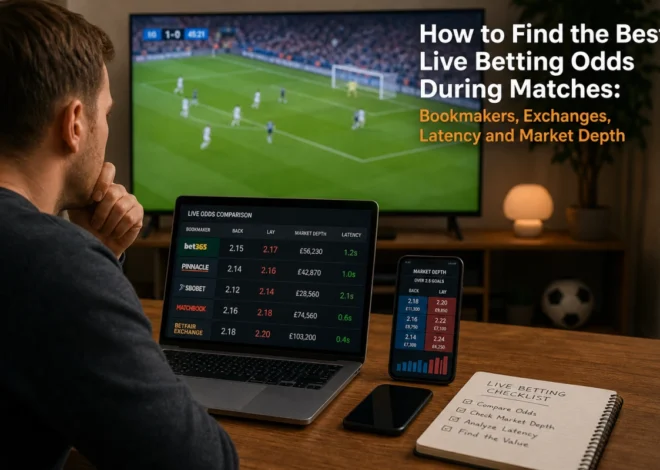
How to Find the Best Live Betting Odds During Matches: Bookmakers, Exchanges, Latency and Market Depth