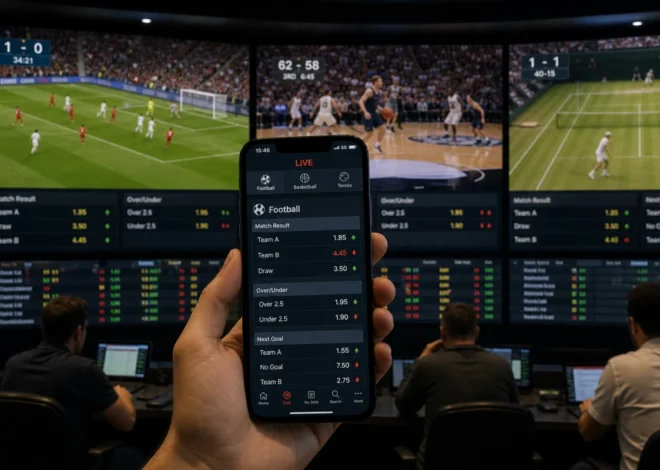

Live Sportsbook Odds Comparison: Which Book Pays the Most?
How live odds impact what you actually get paid
When you bet live, lines move quickly and prices vary across sportsbooks. If you want to know which book pays the most, you have to look beyond the headline odds and understand the mechanics that determine your long-term return. You’ll be assessing not just who posts the best price for a single wager, but which books consistently offer tighter margins, deeper limits, and faster pricing adjustments that benefit bettors.
Live markets differ from pregame markets in three important ways:
- Speed of change: Odds can swing in seconds based on plays, injuries, or betting flow. That creates temporary value pockets if you act fast.
- Liquidity and limits: A book with higher liquidity and larger in-play limits lets you execute bigger, cleaner wagers at posted odds without moving the market.
- Operator margin (vig): The bookmaker’s built-in edge is often higher in live markets to cover volatility and exposure, and that margin directly reduces your expected payout.
What “pays the most” really means for your bankroll
“Pays the most” is a function of the odds you consistently obtain and the commission built into those odds. To compare books, you’ll measure implied probability, convert odds formats when needed, and calculate the bookmaker margin. Over many bets, even small differences in margin compound into meaningful gains or losses for your bankroll.
Key metrics to compare across live sportsbooks
Before you place live bets, focus on a handful of metrics that reveal where value lies:
- Best available price: Compare moneyline, spread, and total prices across multiple books at the same moment. The highest payout for a given selection is not always obvious—bookmakers round and shade odds differently.
- Implied probability and vig: Sum the inverse of all selection odds to estimate the market’s implied probability and calculate the overround (vig). Lower overround means lower house edge.
- Line depth and limits: Check the maximum accepted bet and how quickly price changes when stakes are placed. Books with deeper limits are preferable for larger wagers.
- Latency and execution: In live betting, the time between your click and the book accepting the price matters. Faster execution reduces slippage and canceled bets.
Quick example: converting odds to implied probability
If a moneyline shows -150, convert to implied probability with 150 / (150 + 100) = 60%; for +130, use 100 / (130 + 100) = 43.48%. If a two-way market sums to 105.48%, the 5.48% overround is the bookmaker’s margin that reduces your expected return. You should prefer books that consistently show a smaller overround in live markets.
With these concepts in mind, you’re ready to look at real-world comparisons and patterns among major sportsbooks to see which ones actually return the most value in live play.
Live odds showdown: how major books typically differ
Different sportsbooks take different approaches to live pricing, and those differences show up in how much they pay over time. A few pattern-level observations you can rely on when comparing live markets:
– Pinnacle and Betfair (exchange) — lowest margins. Pinnacle’s model is built around volume and small, consistent margins; in-play vigs are often several percentage points lower than retail U.S. books. Betfair, as an exchange, effectively charges only commission on net winnings, so the built-in market overround can be negligible when liquidity is sufficient. The trade-off: Pinnacle and exchanges may limit or close accounts that consistently win, and exchange fills depend on counterparty liquidity on big events.
– Bet365 — soccer/live market leader. For international soccer and many global sports, Bet365 combines deep liquidity with tight lines and fast adjustments. It’s often the best source for minute-to-minute soccer pricing and in-play props, though U.S.-facing limits and product availability vary by jurisdiction.
– DraftKings & FanDuel — fastest retail prices, heavier shading. These two dominate U.S. retail live betting. They typically offer very fast in-play updates and a broad menu of micro-props, but they also shade prices more aggressively and set lower limits on sharp accounts. For quick, small-stake value on props and game lines they’re excellent; for larger stakes their effective vig is often higher.
– BetMGM & Caesars — balance between limits and customer service. These books tend to sit in the middle: moderate vig, reasonable limits for most recreational sizes, and conservative limit increases. They can be attractive for bettors who want consistent execution without the volatility of sharper books.
– Niche/prop specialists (PointsBet, William Hill historically) — aggressive in certain markets. Some operators will aggressively price specific verticals (props, player markets) to attract action; that can create occasional edge opportunities but also more frequent price movement and canceled bets.
Keep in mind regional differences and account segmentation: a “sharp” account at one operator may face lower limits or worse pricing, while the same operator may offer more competitive lines to recreational accounts. Also, market-specific factors matter — a book that’s best for in-play NBA might be mediocre for live tennis or cricket.
Practical tactics to capture the best live price
Knowing which book tends to pay more is only half the battle; execution matters. Use these practical tactics to capture the best live prices consistently:
– Maintain a curated line-up of books. Don’t try to run every app — pick 4–6 operators that complement each other (one low-vig book, two fast retail books, one exchange) so you can shop instantly.
– Use real-time odds feeds and alerts. Odds-comparison tools, browser extensions, or API feeds let you spot outlier prices as they form. Set alerts for specific markets or price thresholds to act within seconds.
– Optimize for low latency. Desktop + wired connection + bookmaker web UI typically beats mobile apps for speed. Disable confirmation dialogs where possible and use stored payment methods to avoid friction.
– Size bets relative to visible depth. Before committing a large stake, test with a small wager to see how the book handles size and whether the price moves. Respect posted limits; trying to push too much will either be rejected or move the market against you.
– Exploit correlated markets and hedges. Live inefficiencies often appear across related markets (player prop vs. team total). If you identify a misprice, use correlated hedges to lock profit or reduce exposure.
– Track and review. Record execution price, timestamp, and any canceled/voided bets. Pattern analysis reveals which books cancel frequently, which delay acceptance, and where slippage erodes theoretical edge.
By combining a knowledge of operator tendencies with disciplined execution — fast monitoring, appropriate bet-sizing, and careful post-trade review — you’ll be able to extract more value from live markets and reliably identify which books “pay the most” for your style of play.
Putting it into practice
Start small, iterate quickly, and let data drive which books earn you the best net return. Run live experiments with modest stakes to measure execution speed, cancellation rates, and effective vig across the operators you’ve chosen. Keep a simple log of timestamps, accepted odds, and any price movement so you can spot patterns and refine your app set-up and sizing strategy.
Make tools your partner: use real-time odds feeds and alerts from reputable odds comparison sites like odds comparison sites to surface fleeting value, then validate those prices with small test wagers before scaling. Over time, disciplined testing and record-keeping will reveal which books truly “pay the most” for the markets and stake levels you play.
Frequently Asked Questions
How do I calculate the bookmaker’s margin (vig) in a live market?
Convert each selection’s odds to implied probability, sum those probabilities, and subtract 100%. The excess is the market overround (vig). For example, if two-way implied probabilities add to 105%, the vig is 5%.
Which sportsbooks generally pay the most in live betting?
Exchanges and low-margin operators like Betfair and Pinnacle typically offer the lowest built-in margins; Bet365 is often strongest for in-play soccer; retail U.S. books (DraftKings, FanDuel) are fastest but usually have higher vig and account limits; BetMGM and Caesars sit in the middle. Results vary by sport, event, and account profile.
What practical steps reduce slippage and canceled bets when betting live?
Use a low-latency setup (desktop + wired connection), limit the number of apps open, disable extra confirmations, size stakes to visible depth, place a small test bet before large wagers, and favor books with consistent in-play execution histories.

Related Posts
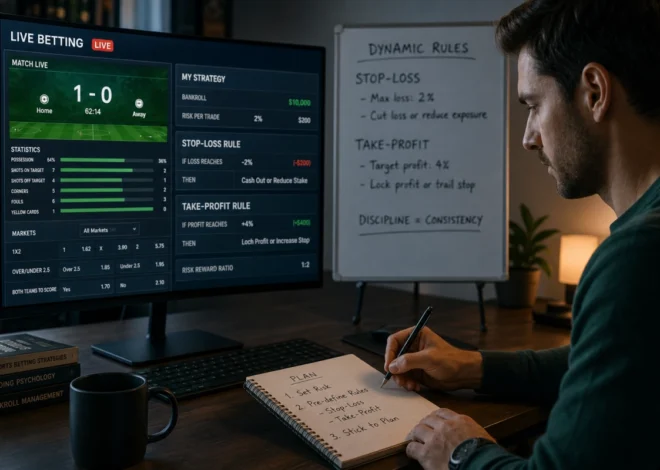
A practical guide to pre-defining and applying dynamic stop-loss and take-profit rules for live betting bankroll management

How to find the best live betting odds in-play: tools, latency and smart execution