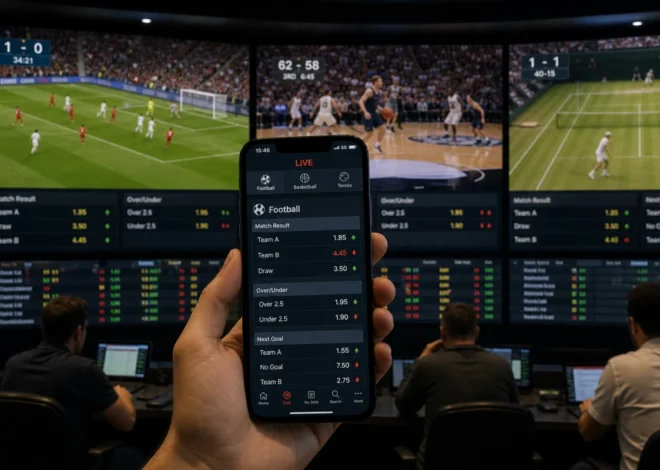

Real-Time Betting Odds Guide: Stay Ahead with Instant Updates
Why real-time odds change the way you place live bets
You already know that odds reflect probability and payout. Real-time odds take that concept a step further by updating continuously as events unfold. When you bet in-play, the market reacts to injuries, momentum shifts, weather changes, referee decisions, and betting volume within seconds. That constant stream of information gives you an edge if you can read and act on it faster than the market.
Using live odds effectively means you’re not guessing based on pre-match lines. Instead, you’re responding to new information as it arrives. That responsiveness can allow you to:
- Lock in value before the market corrects itself.
- Hedge positions when momentum turns against you.
- Spot discrepancies between bookmakers and exchange prices.
- Exploit timing advantages when you know how odds move after specific events.
Because odds change so quickly, your process must be disciplined: define entry and exit rules, set limits on reaction speed, and decide which markets you’ll trade live. Without clear rules, the speed of live markets can lead to impulsive decisions and poor bankroll management.
How live odds are produced and where you should look for updates
Understanding the mechanics behind live odds helps you evaluate their reliability. Bookmakers combine automated models, trader input, and market signals to adjust lines. Odds providers and data feeds aggregate speed-sensitive information—such as scores, event timestamps, and betting volumes—and push updates to platforms in milliseconds.
Primary sources of real-time odds
- Bookmaker feeds: The direct streams from sportsbooks; they’re authoritative for that operator’s prices but can lag or suspend during volatile moments.
- Odds aggregators: Services that collect and display prices from many bookmakers, helping you compare value quickly.
- Betting exchanges: Peer-to-peer markets where prices are set by matched bets; exchanges often reflect the sharpest moves because professional money flows there.
- Data vendors and APIs: Professional traders use low-latency APIs that supply tick-by-tick updates for automated strategies.
Latency matters. Even a few hundred milliseconds of delay can turn a perceived edge into a loss when a goal, turnover, or penalty immediately shifts odds. When evaluating providers, check their update frequency, historical uptime, and how they handle event suspensions or corrections.
Finally, be aware of differences in market depth and liquidity. Some niche markets show erratic price swings because fewer bets are matched, while major markets (like top-league soccer or moneyline in tennis) tend to be smoother and more predictable. Tailor your use of real-time odds to markets where your timing and information advantage are strongest.
With that foundation, you’re ready to explore practical tactics: next, you’ll learn step-by-step strategies for reading live-implied probability, timing entries and exits, and using tools that automate parts of your live-betting workflow.
Reading live-implied probability and spotting real value
When odds move in-play they’re telling a story about changing probability. Your job is to read that story faster and more accurately than other market participants. Start by converting odds into live-implied probability (for decimal odds: 1/odds). Then adjust for the bookmaker’s margin so you’re comparing true market probability rather than the inflated price. This simple normalization helps you identify genuine edges rather than false positives caused by vig.
Practical steps to spot value:
- Track implied probability before and after key events (e.g., injury, goal, red card). A rapid swing that doesn’t match the on-field impact can indicate an overreaction.
- Compare across sources in real time. If the exchange or a sharp bookmaker moves significantly before the general market, that move likely reflects informed money.
- Watch for divergence between momentum and odds. For example, if a team dominates possession and chances but the odds barely move, the market may be slow to price expected outcomes—an opportunity if you can quantify the expected value.
- Use basic models for expected scoring or win probability. Even simple Poisson or in-play expected-goal adjustments give you a benchmark to test live lines against.
Remember: not every discrepancy is actionable. Factor in liquidity—thin markets amplify noise—and always account for potential delays in data feeds that can make an apparent value trade illusory.
Timing entries, exits, and hedge rules for disciplined live trading
Speed is valuable, but discipline wins. Define trigger rules that tell you when to enter, scale, or exit a position so you avoid emotional reactions. Keep rules simple and measurable.
- Entry triggers: e.g., back if implied probability drops by X% relative to your model within Y seconds after a key event; or lay when the exchange percentage moves above a preset threshold showing market consensus against your projection.
- Scaling: Break bets into tranches so you can average in and manage the risk of adverse immediate moves. A common approach is 50/30/20 sizing across successive opportunities.
- Exit and hedge: Predefine a profit target and maximum acceptable loss for each live trade. Use exchanges to hedge by laying a backed selection when odds reach a point that locks in your desired profit or cuts loss to acceptable levels.
- Timeouts: If markets suspend (e.g., VAR check) or data lag occurs, enact a timeout rule—pause new entries until feeds and markets normalize.
Log every live decision. Short-term performance will be noisy, but patterns in your P&L and in-market behavior will reveal which timing rules reliably produce value.
Tools and automation that keep you faster than the market
Manual betting has limits. Tools that automate parts of the workflow reduce reaction time and remove impulse errors. Prioritize tools that improve speed, visibility, and execution consistency:
- Hotkey-enabled trading clients or API-driven bots to place, cancel, and hedge bets in milliseconds.
- Multi-feed aggregators that timestamp and display the fastest quotes side-by-side so you can see which provider is leading price discovery.
- Simple automation rules for common actions (e.g., auto-hedge at X odds, scale stakes using a fixed schedule) while keeping manual override available for edge cases.
- Latency monitoring and mock trading environments to test your setup under realistic conditions before risking capital live.
Start small when introducing automation. Validate strategies in simulation, then with low stakes, and expand only after consistent, measurable edges emerge. Automation should amplify your process, not replace the judgment and rules that make you profitable with live odds.
Putting real-time odds into action
Live markets reward preparation as much as speed. Treat each session as data: test rules in simulation, start with low stakes, and expand only when your edge is consistent. Prioritize latency checks, clear entry/exit rules, and a simple automation layer that complements—not replaces—your decision process. Maintain disciplined bankroll control, log every trade, and review outcomes to refine triggers and sizing over time.
For technical reference on APIs and low-latency feeds when you move toward automation, consult the provider documentation before integrating any service, for example Betfair API documentation. Always confirm regulatory compliance in your jurisdiction and treat automation as a tool to enforce discipline, not a shortcut to profits.
Frequently Asked Questions
How quickly do real-time odds update and how much does latency matter?
Odds can update in milliseconds after an event or incoming market pressure. Latency matters a lot—hundreds of milliseconds can remove value in fast-moving scenarios. Measure round-trip times for your data feed and execution path, and use that information to set realistic timing rules for entries and hedges.
Can automation replace manual judgment in live betting?
No. Automation speeds execution and enforces rules, but it should implement the decision framework you’ve validated manually. Use bots for repetitive actions (scaling, auto-hedge) while keeping manual overrides for unexpected game states and market anomalies.
Which markets are best suited for live, real-time betting?
Prefer liquid, high-profile markets (top-league soccer, major tennis matches, large horse races) where pricing is smoother and liquidity supports timely hedges. Avoid very thin or niche markets that exhibit erratic swings unless you specifically trade noise and understand the higher execution risk.

Related Posts
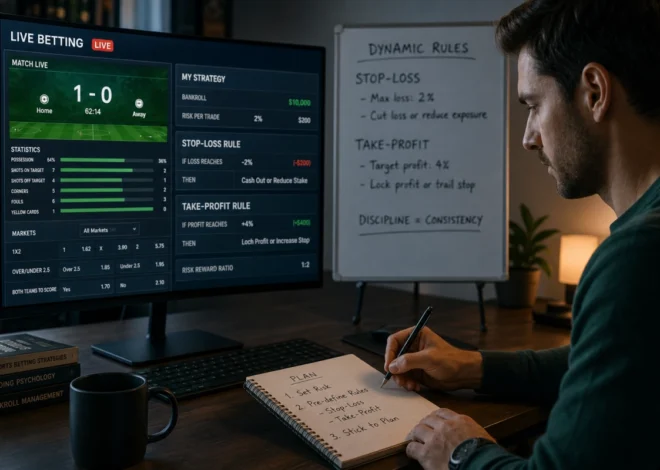
A practical guide to pre-defining and applying dynamic stop-loss and take-profit rules for live betting bankroll management

How to find the best live betting odds in-play: tools, latency and smart execution