
In-Play Betting Odds Explained: How to Read and Use Live Lines
Why in-play (live) odds matter and how they differ from pre-match lines
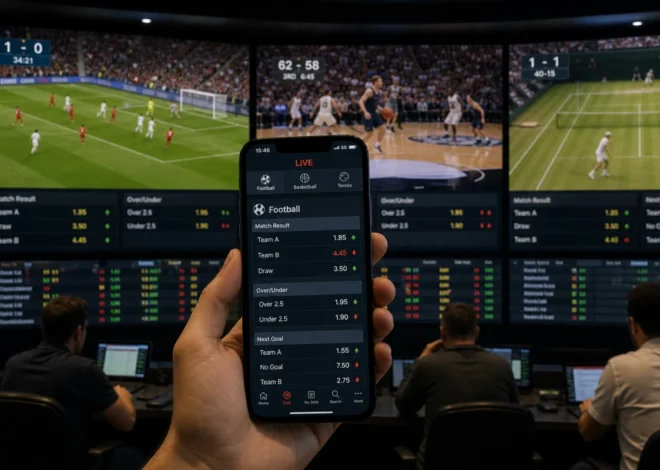
When you place a bet after kickoff, tip-off, or the first serve, you’re using in-play or live betting lines. These odds are dynamic: they change every second to reflect the evolving state of the event. Unlike pre-match markets, live lines react to momentum swings, injuries, referee decisions, and shifting market sentiment. That means you can both find opportunity and face rapid risk if you don’t read the lines correctly.
As you watch a game, the numbers you see are not just simple prices — they are condensed signals about probability, liquidity, and bookmaker exposure. Learning to interpret those signals quickly is the foundation of effective in-play betting.
How live odds are displayed and what each format tells you
Common odds formats and implied probability
Bookmakers present live odds in three main formats: decimal (e.g., 1.75), fractional (e.g., 3/4), and American/moneyline (e.g., -133). You should be comfortable converting between them because each format makes certain judgments easier:
- Decimal: Multiply your stake by the decimal to get total return. Useful for quick mental math when the market moves fast.
- Fractional: Traditional in some regions; it shows profit relative to stake. Good for comparing smaller shifts.
- American/moneyline: Distinguishes favorites (-) from underdogs (+). Handy for visualizing who the market favors at a glance.
All formats implicitly reflect probability. Convert odds to implied probability to see how the market’s expectations change as play unfolds: implied probability = 1 / decimal odds. If a team’s decimal odds drop mid-game, their implied chance of winning has increased in the market’s view.
What the spread, total, and moneyline mean during play
Live lines cover the same core markets you see pre-match, but with additional nuance:
- Spread (handicap) — Adjusted continuously to balance betting on each side as the score changes.
- Total (over/under) — Moves with game tempo, shots on target, or possession metrics; sharp changes often follow major events (e.g., red cards).
- Moneyline — Reacts to momentum and substitutions; quick swings can create value if you spot overreactions.
As you monitor these markets, watch for how quickly a price moves, not just its level. Rapid movement often signals new information or imbalance between bettors and the book’s liability, which can present opportunities if you react decisively.
Next, you’ll learn the mechanics behind why live lines shift — including latency, bookmaker models, and market sentiment — and practical tactics to exploit those movements responsibly.
Why live lines move: latency, pricing models and market flow
Live lines are the product of several moving parts working at speed. Understanding each helps you differentiate meaningful shifts from noise.
- Data latency: Odds depend on real-time feeds — score updates, substitutions, injuries, and advanced match metrics (e.g., expected goals). A few seconds’ delay between what you see on TV and what the bookmaker’s model receives can produce short-lived mispricings. Professional traders exploit milliseconds; recreational bettors can still benefit by recognizing the temporary nature of these gaps.
- Pricing models and trader overlays: Bookmakers use automated models to quote odds, but human traders often override or smooth those numbers when liquidity or unusual events arrive. If an algorithm reacts wildly to a stop-start event (like a VAR check), a trader might hold a price steady until clarity arrives — watch for pauses or clustering in prices as a sign the book is stabilizing.
- Market liquidity and stake flow: Big bets move lines. When sharp money (professional bettors or syndicates) lands on an outcome, the book adjusts to limit liability. Conversely, heavy retail action can push a line in the opposite direction as the book seeks balance. Knowing whether movement is driven by a handful of large stakes or many small ones changes how you interpret it.
- Overround and implied margin: Live markets often widen the bookmaker margin to protect against rapid uncertainty. If several outcomes’ implied probabilities sum to far more than 100%, the market is inflated; that’s a warning the book is prioritizing protection over fair pricing.
- External information and sentiment: Crowd psychology matters. A bounced header or disputed call can create knee-jerk overreactions — sometimes profitable if you act before the market fully corrects, other times risky if you misread the driving force.
Distinguish between structural moves (driven by real change in win probability) and technical noise (driven by latency, hedging, or market balancing). Your edge comes from recognizing which is which and timing your action accordingly.
Practical in-play tactics: spotting value, managing latency, and protecting your bankroll
Translating market awareness into consistent results requires a blend of tactics and discipline. Below are practical approaches that experienced in-play bettors use.
- Wait for the market to breathe: After a major event (goal, red card, injury), allow a few seconds for prices to settle. If you’re confident the change is permanent (e.g., a clear red card), you can act quickly; if it’s ambiguous, brief hesitation often saves you from overpaying.
- Shop for the best live price: Different books react at different speeds. If you watch one provider while another still posts an outdated higher price, that’s an immediate opportunity. Keep multiple tabs or use a betting exchange to compare instantly.
- Scalp small edges, don’t chase big wins: Small, repeatable profits from quick trades beat rare big wins that blow bankrolls. Scalping on momentum swings or laying inflated favorites on exchanges are common low-duration strategies.
- Use staking rules and loss limits: Limit exposure per in-play bet (commonly 1–2% of bankroll) and set a daily loss cap. In-play volatility can erase gains fast; predefined limits preserve longevity.
- Exploit expected-value differences, hedge smartly: If a pre-match position has moved favorably in-play, hedge partially to lock profit, not necessarily close completely. Calculate the expected value after commission and transaction costs before hedging.
- Leverage statistics and context: Track high-frequency metrics (shots in the box, dangerous attacks, time in final third). A sustained discrepancy between these indicators and the market price often signals value.
- Mind latency and automation carefully: Faster connections and low-latency apps help, but automated bots introduce operational and regulatory risks. If you use automation, test thoroughly and respect bookmaker terms.
- Respect limits and account management: Successful live bettors diversify where they bet and avoid attracting restrictions. Consistent large gains can lead to limiting; aim for subtle, steady returns rather than obvious exploitative patterns.
Applied consistently, these tactics reduce the chance of being whipsawed by the market and increase the probability of capturing small, repeatable edges during live play. In the next section we’ll cover specific staking plans and tools to execute these strategies effectively.
Staking plans and tools for in-play betting
Choosing the right staking method and the right tools is essential to execute in-play strategies without blowing your bankroll. Below are practical options and the tech that helps you act fast and stay disciplined.
- Flat staking: A fixed amount per bet. Simple and low-risk for volatile live markets.
- Percentage staking: Bet a fixed percentage of your current bankroll (commonly 1–2%). This scales risk to account size and limits ruin during losing streaks.
- Kelly (fractional): The Kelly Criterion can size stakes when you can estimate edge, but in-play volatility and estimation error make full Kelly too aggressive; use a fractional Kelly (e.g., 10–25%).
- Stop-loss and session limits: Set a maximum loss per match or session and stick to it to avoid tilt-driven mistakes.
- Hedging and cash-out discipline: Hedge selectively to lock profits or reduce risk; always weigh transaction costs and commission on exchanges.
- Tooling: Use multiple bookmakers, a betting exchange for laying, low-latency connections, and live-odds comparison tools. Track bets with a simple spreadsheet or a portfolio tracker to review performance.
- Automation caveat: Bots can exploit speed edges but require rigorous testing and compliance with bookmaker terms; misuse risks account restrictions.
For tutorials and deeper strategy guides on live markets and risk management, reputable resources such as live betting resources can provide model explanations and case studies.
Putting it into practice
Live betting rewards preparation, patience, and controlled execution more than bravado. Start small, keep records, and iterate on what works. Let data and disciplined staking guide choices rather than emotion. Over time, consistent micro-advantages compound into a reliable approach — and if the market changes, be ready to adapt.
Frequently Asked Questions
How quickly do I need to act to profit from a latency gap?
Latency windows can be seconds long for recreational bettors (milliseconds for professionals). Use multiple bookmakers or an exchange to capture outdated prices when they appear, but prioritize accuracy over speed — acting on clear, sustained changes (not transient noise) reduces risk.
Is it safer to use exchanges rather than bookmakers for in-play trading?
Exchanges offer lay and back functionality, giving you greater flexibility to hedge or scalp and often better prices. However, they charge commission and require sufficient liquidity in the market. Use exchanges where liquidity and fees align with your strategy.
How should I adjust staking after a big in-play win or loss?
Stick to your predefined staking rules. After a big win, resist increasing stakes impulsively — consider rebalancing back to your percentage or flat stake level. After a loss, respect stop-loss limits and review mistakes rather than chasing losses; disciplined reduction of stake after drawdowns preserves capital.

Related Posts
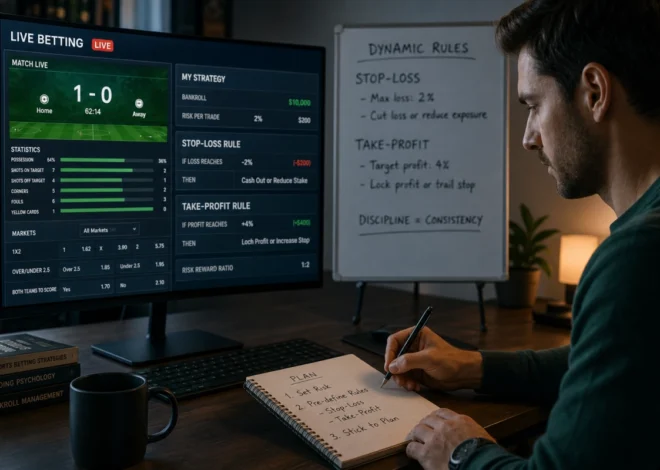
A practical guide to pre-defining and applying dynamic stop-loss and take-profit rules for live betting bankroll management

How to find the best live betting odds in-play: tools, latency and smart execution