Live Betting Odds vs Pre-Match Odds: When to Bet In-Play
Why live betting demands a different mindset than pre-match wagering
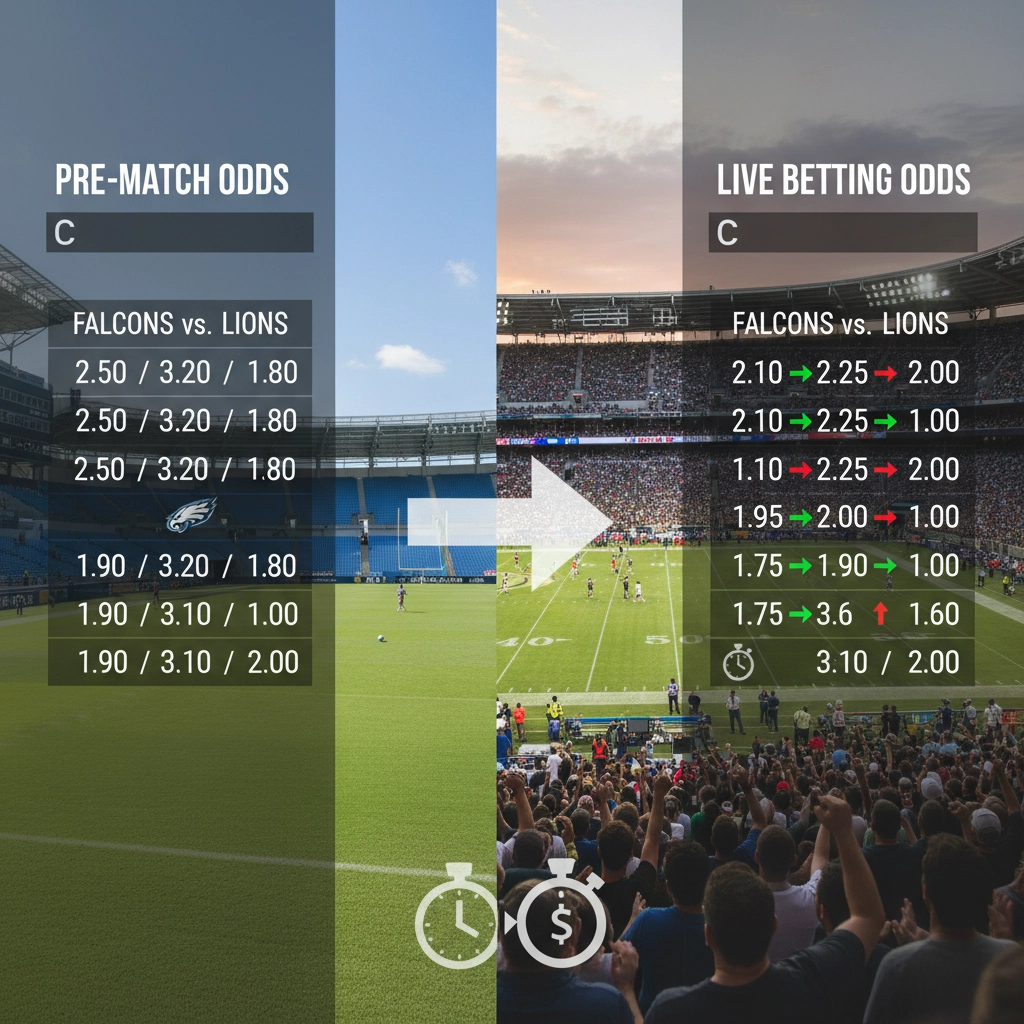
When you place a pre-match bet, you rely on forecasts, team form, and static markets that close at kickoff. Live betting—also called in-play—moves at a different pace: odds react continuously to events on the field, pitch, or court. That dynamism creates opportunities but also introduces new challenges. To decide whether to bet in-play you need to understand how prices form, how quickly they change, and what kinds of edges are realistic for a recreational bettor versus a professional trader.
How pre-match markets are built and what that means for you
Pre-match odds are usually the product of longer-term analysis and more time for bookmakers to balance liability. You get:
- Stable prices based on season data, injuries, and expected tactics.
- More time to shop around and compare lines across bookmakers.
- Less immediate reaction to specific match events (because the market has already priced many factors).
This stability can help you identify value using form, head-to-head records, and advanced metrics. If you prefer measured research and finding slow-moving edges, pre-match betting suits you better.
What changes when you move to live betting: speed, volatility, and new information
In-play markets are defined by rapid information flow. A single event—a goal, a red card, or a tactical substitution—can flip probabilities within seconds. For you, that means both opportunity and risk:
Price movement and reaction time
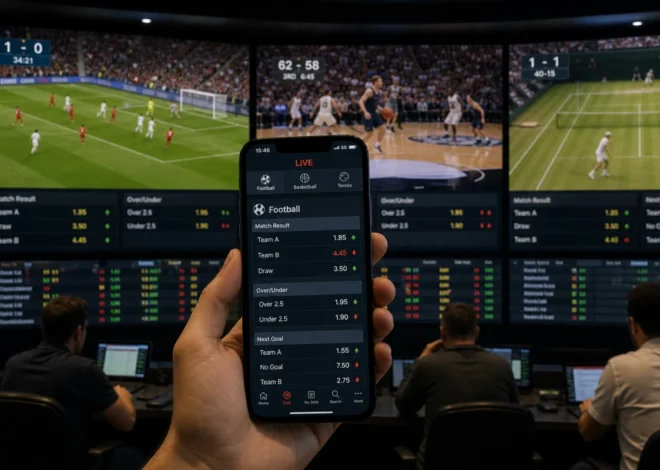
Odds will swing quickly after key events. If you can interpret in-game developments faster than the market or react by using tools (fast apps, multiple books, live stats), you can capture transient value. However, bookmakers invest in technology and traders who often narrow or remove those edges very fast, so timing matters.
Liquidity and market limits
Some markets thin out in-play. Popular leagues and match outcomes remain liquid, but niche bets (first scorer after minute 70, next corner) may have big spreads or get limited. That affects how much you can stake and whether your bet will get matched at the price you see.
How new information creates different kinds of value
- Corrected pre-match assumptions: If a key player underperforms early, pre-match odds may no longer apply—creating opportunities.
- Momentum and context: You can exploit transient momentum swings that aren’t reflected in long-term data.
- Hedging and trading: Live betting lets you lock in profits or reduce losses during a match, which is harder to do pre-match.
Understanding these mechanics helps you choose when in-play betting is appropriate for your bankroll and skill level. In the next part, you’ll get practical examples and a decision framework for when to place in-play bets—and the strategies to use once you decide to act.
A practical decision framework for betting in-play
Before you tap “place bet” in the heat of a match, run a quick checklist so decisions remain systematic, not emotional. Use this simple framework each time you consider an in-play wager:
- Can I watch the event live? If not, odds moves and nuance are harder to judge. Watching reduces informational disadvantage.
- Is the market liquid and reasonably tight? Stick to markets where your stake will be matched without huge slippage (major leagues, top tennis matches, high-profile basketball).
- Do I have a clear hypothesis? Are you betting because of a concrete read (red card changes win probability, tactical shift, momentum) rather than gut feel?
- Is there a timing edge? Can you act faster than the market using tools, or are you reacting after traders have moved prices?
- Is the stake size sensible? Apply tighter staking than pre-match — in-play variance is higher, so reduce stake size or frequency.
If the answer to any of the above is “no,” it’s usually better to refrain or place a small hedge/market trade rather than chase value you don’t truly see.
Actionable in-play strategies and real examples
Once you decide to act, choose strategies that match the situation and your skill set. Below are practical approaches with examples you can replicate.
- Value hunting after correcting events — Example: A pre-match favourite concedes an early goal but maintains 70% possession and consistent xG advantage. If the market overreacts and boosts the underdog’s outright, backing the favourite to win at the inflated price can be profitable because match dynamics still favour them.
- Scalping transient lines — For fast markets (basketball possessions, tennis points), capture tiny edges repeatedly. This requires low latency, multiple books, and small stakes per trade; gains come from frequency rather than single large wins.
- Hedging to lock profit or limit loss — Numeric example: you backed Team A pre-match for $100 at 2.10 (potential return $210). Team A leads late and remains favorite, but the draw is priced 5.00. To guarantee a profit regardless of outcome, stake S on draw such that outcomes balance: 5S – 100 = 210 – S → S ≈ $51.67. This locks a guaranteed return (~$158.33) versus risking the match finish.
- Follow-the-momentum (with caution) — In sports where momentum spikes matter (soccer after a red card, tennis after a break), small bets on the team/player gaining momentum can work — but cap stakes and exit quickly when momentum normalizes.
Additional tactical notes: use live-data overlays and fast streaming to reduce reaction latency; keep an eye on limits — bookmakers may restrict accounts showing repeated in-play profits; and avoid niche markets in lower-tier games where spreads are wide and limits low. Finally, treat in-play bets as trades: set entry criteria, predetermined stake, and an exit plan (profit target or stop loss) before you wager.
Putting live betting into practice
Treat in-play betting as a skill you build, not a quick win. Start with a clear routine: watch matches you plan to bet on, use two or three bookmakers for price comparison, and paper-trade or use very small stakes until you consistently follow your checklist under pressure. Keep a short journal of each in-play decision (market, trigger, stake, outcome) so you can spot recurring mistakes and refine entry/exit rules.
Set hard limits before you start: a maximum number of in-play bets per session, a per-bet stake cap, and a stop-loss for the day. Be aware that repeated in-play success draws bookmaker attention — expect tighter limits or refusal of certain markets and plan diversification accordingly. Finally, if gambling ever feels like it’s becoming a problem, use available support; see responsible gambling resources for guidance and help.
Frequently Asked Questions
When is in-play betting a better option than pre-match wagering?
In-play is preferable when new, observable match events change the underlying probabilities (red cards, tactical shifts, sudden momentum) and you can watch and act faster than the market. It’s also useful for hedging pre-match positions or exploiting transient mispricings. Avoid in-play if you can’t watch, if the market is illiquid, or if you lack a timing edge.
How should I size stakes for live bets compared to pre-match bets?
Use smaller stakes for in-play because variance and speed increase risk. Many bettors reduce their usual stake size by 25–75% depending on confidence and market liquidity. Apply the same discipline—predetermine stake, profit target, and stop loss—and consider a fractional Kelly approach if you model edges numerically.
What tools and practices improve my chances of finding value in live markets?
Fast access to odds (multiple bookmakers), a low-latency stream or live scoreboard, and live-stat overlays (possession, xG, shot maps) materially help. Pre-match research, a concise in-play checklist, and recordkeeping are equally important. Remember bookmakers invest heavily in technology and traders; tools help, but disciplined process and bankroll management matter most.

Related Posts
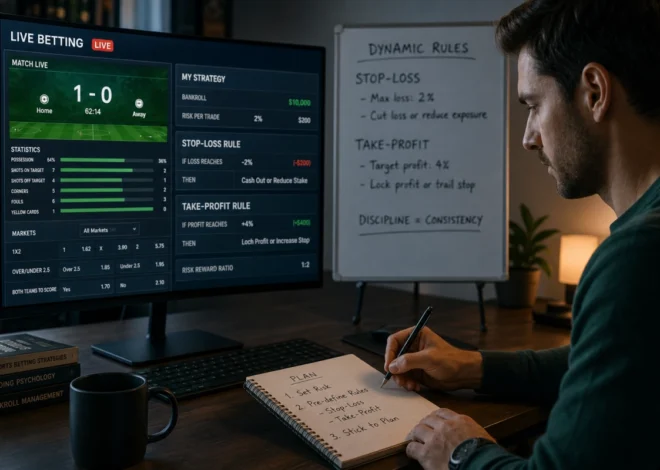
A practical guide to pre-defining and applying dynamic stop-loss and take-profit rules for live betting bankroll management

How to find the best live betting odds in-play: tools, latency and smart execution