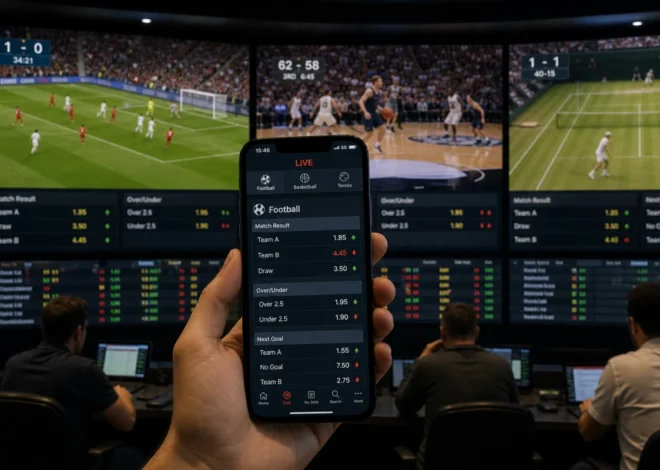

Where to Find the Best Live Sportsbook Odds for Major Events
Why live odds matter when betting on major events
When a major match, fight, or tournament is underway, the betting landscape can shift in seconds. You need sources that update quickly and display depth so you can act on value before the market adjusts. By understanding where to find reliable live odds and how to compare them, you improve your chances of spotting mispriced lines and managing risk during fast-moving situations.
Live odds reflect the flow of the event, public money, and bookie risk management. You’ll want feeds that show not only the current price but also recent movement, available limits, and any latency in updates. In practice, that means using a combination of sportsbooks, exchanges, and real-time aggregators rather than a single site.
Primary sources to check for the best live odds
Top-rated online sportsbooks
Major licensed sportsbooks (both international and local operators) are your first stop. They often offer deep markets, high limits for big events, and fast in-play interfaces. You should:
- Compare multiple reputable books to find the highest price on a market (moneyline, spread, totals, props).
- Watch for promotions and enhanced odds that occasionally appear during big events.
- Note stake limits and maximum payouts—better odds mean little if your bet is capped.
Betting exchanges and peer-to-peer markets
Exchanges (where you bet against other users) can offer superior prices because they remove the bookmaker margin. If liquidity is good during a major event, you can often get better back or lay odds than at a traditional sportsbook. Keep in mind:
- Liquidity matters: check available matched money before placing large in-play bets.
- Commissions apply on wins—factor that into whether a price is truly better.
Odds aggregators and comparison platforms
Aggregators pull live prices from multiple sources and present them side-by-side. They’re invaluable when you only have seconds to choose a book. Use these platforms to:
- Quickly identify the best available price across dozens of operators.
- Track line movement trends—see which books are moving and where sharp money appears to be.
- Set alerts for price thresholds so you don’t miss favorable changes.
Specialized live-betting apps and data feeds
For the most active in-play traders, dedicated live-betting apps and professional data feeds provide ultra-low latency odds and advanced visualizations (heatmaps, pressure metrics). These are often paid services but can pay off if you trade frequently on major events.
Armed with these sources, you’ll be ready to compare prices, check liquidity, and decide where to place fast-moving bets. Next, you’ll learn practical methods to read market signals, manage latency, and craft an in-play staking plan that suits major-event volatility.
Reading market signals and spotting sharp money in-play
Once an event is live, the smartest moves come from interpreting the market’s behavior rather than guessing outcomes. Start by watching price drift and velocity: a sudden consistent move across multiple books toward one side often signals large or “sharp” bets. Contrast that with slow, lopsided movement on a single retail-focused book, which is more likely public reaction. Useful signals to monitor include:
- Cross-book alignment: if three or more reputable books move in the same direction within seconds, treat that as a higher-quality signal.
- Volume and liquidity changes: exchanges show matched volume—spikes here are stronger indicators than isolated price shifts on sportsbooks.
- Implied probability gaps: calculate implied probability from odds and track deviations from pregame expectations (e.g., a sudden 10–20% swing in implied win chance warrants attention).
- Market breadth: a single market shifting (moneyline) is different from correlated movement across spreads, totals, and props—broad shifts suggest information-driven action (injury, weather, momentum).
Combine these signals with context from the event: key injuries, red cards, momentum swings, or tactical changes often precede sharp market moves. Use a lightweight checklist: confirm the move across at least two sources, verify liquidity, and size your stake relative to the book’s displayed limits and your confidence level.
Managing latency, connectivity, and execution risk
In-play betting is a race against latency. Even small delays can turn a +120 into +100 within seconds. Reduce execution risk by preparing before the event and by optimizing your tech stack during live play:
- Pre-fund and pre-verify accounts so you don’t lose time on deposits or identity checks mid-event.
- Use low-latency aggregators or paid data feeds if you need the fastest prices—these services typically timestamp updates so you can judge freshness.
- Place test bets during warmups to measure real-world response times for each book; record typical lag and factor it into your decision-making.
- Set up multiple entry points: desktop for visualization, mobile for quick stakes, and, if you use an API, a reliable VPS located close to the exchange servers to reduce ping times.
- Watch for partial fills and cancellations on exchanges; have a protocol (e.g., cancel and retry up to X times) and acceptable slippage thresholds documented beforehand.
Finally, respect each bookmaker’s interface quirks—some throttle rapid bettors or limit stake sizes after wins. Rotating between several books reduces single-operator friction and helps preserve access to the best prices.
Crafting an in-play staking plan for major-event volatility
Volatility at big events can be extreme; your staking method must be disciplined and flexible. Choose a primary model (flat stakes, percentage of bankroll, or fractional Kelly) and define rules for scaling in and out. Practical elements to include:
- Base stake as a fixed percentage of your active bankroll for the event (commonly 1–3%).
- Scaling rules: add a predefined fraction (e.g., +50%) only when three or more market signals align and liquidity supports the size.
- Stop-loss and take-profit levels: cap losses per event (e.g., 5% of bankroll) and lock profits by laying off positions on exchanges or using hedges when favorable.
- Use exchange limit orders to secure desired prices; if using books, set manual thresholds for acceptable slippage before abandoning a trade.
- Document every live bet quickly (market, odds taken, stake, rationale) to review performance and refine the plan post-event.
Above all, accept that not every in-play opportunity is worth it. Preserving capital during chaotic phases often wins more than chasing marginal edges. A clear, rules-based staking plan protects you from emotion-driven mistakes and helps exploit the best live odds when they appear.
Before you start using live odds for major events, set up a short pre-event routine: confirm account funding and verification, test response times, and decide on the markets you’ll watch. Keep a simple log of every in-play trade (market, odds, stake, outcome and brief rationale) so post-event reviews become the engine for improvement.
Putting your live-odds game plan into motion
Start small, stay disciplined, and iterate. Use low-stakes practice sessions or demo/low-limit accounts to build familiarity with interfaces and latency behavior. When you’re ready to scale, rely on the rules and risk limits you’ve documented rather than impulse decisions. For quick comparisons during live events, consider aggregators such as OddsPortal to spot the best available prices across books and exchanges.
Frequently Asked Questions
Which source typically shows the fastest live odds updates?
Professional data feeds and low-latency aggregators are usually the fastest, followed by major betting exchanges that prioritize real-time matching. Retail sportsbooks vary—some update rapidly, others lag—so measure each provider’s response time with test bets before relying on them for fast in-play moves.
How can I minimize execution risk when placing in-play bets?
Minimize execution risk by pre-funding and verifying accounts, using a VPS or device with low ping for API/automation, placing a few test bets to gauge real-world latency, and setting clear slippage thresholds. Also spread activity across multiple books to avoid being throttled or limited by a single operator.
Are betting exchanges always a better choice than sportsbooks for in-play wagering?
Not always. Exchanges can offer better prices and the ability to lay, but they require sufficient liquidity and charge commissions on winning bets. For large stakes or niche markets with low exchange volume, a traditional sportsbook may be more practical. Factor in liquidity, commission, odds movement, and your stake size when choosing between them.

Related Posts
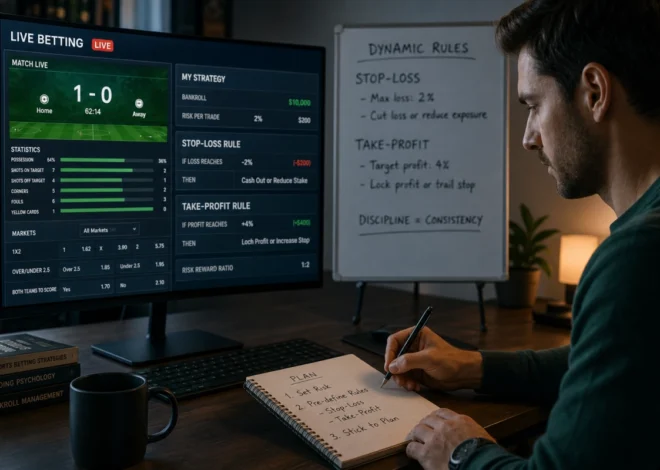
A practical guide to pre-defining and applying dynamic stop-loss and take-profit rules for live betting bankroll management

How to find the best live betting odds in-play: tools, latency and smart execution