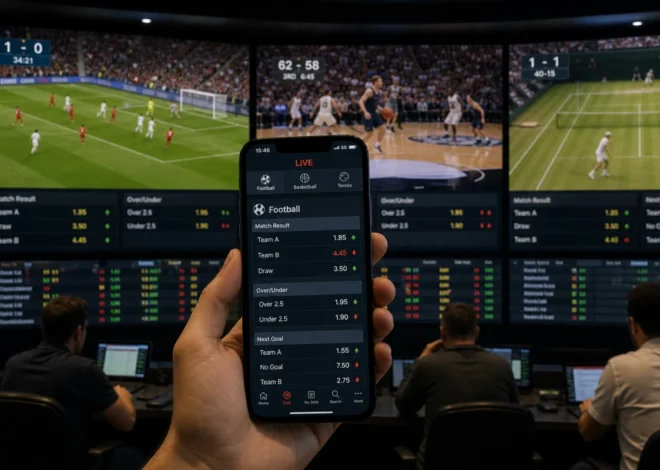

Best Live Betting Odds for Football and Basketball Matches
Why live betting odds can make or break your in-play strategy
You already know pre-match lines set the baseline, but live betting is a different animal: odds update in seconds and reflect real-time events. When you bet in-play, you’re not just reacting to a final score — you’re interpreting momentum swings, substitutions, injuries, referee decisions, and how other bettors are staking money. Understanding why live odds move gives you an edge because it helps you distinguish between temporary noise and genuine shifts in expected outcomes.
Core reasons live odds shift during football and basketball matches
- Score and game clock: A goal or a three-pointer fundamentally alters win probability, and remaining time compresses the impact of that event.
- Momentum and possession: Sustained pressure, long possessions, or a fast break run can lead bookmakers to shorten lines before the scoreboard updates reflect the threat.
- Key player events: Injuries, substitutions, or ejections change team strength instantly — particularly if a primary scorer or goalkeeper is affected.
- Stat-based inputs: Live expected goals (xG), shot quality, turnover rates and rebound margins feed automated models and human traders who adjust lines.
- Betting volume and market sentiment: Heavy money on one side can force a bookmaker to move odds to rebalance exposure, sometimes creating short-term value elsewhere.
- Latency and feed errors: Delays between on-field events, data-feed updates, and odds re-pricing create brief windows where the market misprices outcomes.
How bookmakers generate live odds and what you should monitor
Bookmakers combine automated models with trader oversight. Models ingest live data feeds (possession, shot location, fouls, timeouts), translate them into win probabilities, then add a margin. Traders intervene when the model misses contextual information — a tactical switch or a player clearly underperforming. As a bettor, your job is to read the same signals and act faster or smarter than the aggregated market.
Practical indicators to watch while live betting
- Market depth: Check liquidity and odds across several sportsbooks; bigger discrepancies often indicate opportunity.
- Implied probability vs. your estimate: Convert odds into percentages and compare them to your own read of the match state — that’s the essence of finding value.
- In-play stats stream: Use live xG, shot maps, possession timelines and turnover metrics rather than relying solely on the scoreboard.
- Latency windows: Be aware of moments immediately after key events when odds lag — but tread carefully; these can flip quickly.
- Bankroll and stake control: Smaller, disciplined stakes and quick cashout rules help manage higher variance in live markets.
With these fundamentals, you’ll be prepared to recognize when a live price reflects real change versus market reaction; next, you’ll learn practical methods for comparing bookmakers and executing bets to capture the best live odds in football and basketball matches.
How to compare live lines across bookmakers in seconds
Line-shopping is the single most practical edge in live markets. You don’t need to outsmart a trader — you need to find where they’ve mispriced an event relative to peers. Do this quickly and methodically.
- Have multiple accounts and a plan: Open accounts with several sportsbooks and at least one betting exchange. Different operators respond to the same event at different speeds; having options lets you pick the cleanest price.
- Use a dedicated odds comparison tool: Real-time aggregators show side-by-side odds across books for common markets (match-winner, totals, handicaps). Filter to the markets you trade so you’re not paralyzed by noise.
- Watch the exchange market: Exchanges often lead price discovery. A sudden shift in lay/back interest on an exchange can signal a genuine change before retail books catch up — and it can also be a place to hedge or lay off risk.
- Focus on a few markets: Don’t try to compare every prop. Prioritize match result, total goals/points, and 1st-half/1st-quarter lines where liquidity is higher and movement is meaningful.
- Implied probability checks: Convert odds to implied percentages and compare to your estimate within seconds. A gap of 3–5% in implied probability on a short timeframe is often actionable.
Execution tactics: placing and managing live bets
Getting a good price is half the battle — how you stake and manage positions determines long-term profitability.
- Speed and interface choice: Use the fastest interface available: native apps or desktop web with keyboard shortcuts beat slow mobile pages. For exchanges, use interface features like quick-lay buttons and liability previews.
- Staggered stakes and micro-laddering: Instead of one large stake, ladder bets in small increments as the market moves. This reduces slippage and lets you average into a position or lock profit with partial hedges.
- Cashout vs. hedge: Cashout is convenient but comes with a premium. Whenever possible, compare cashout value to the cost of laying the position on an exchange — sometimes laying is cheaper and preserves margin.
- Reactive rules: Set trigger rules beforehand: maximum exposure per match, exit points (e.g., cash 50% at +50% profit), and loss limits. Emotional on-the-fly decisions are costly in in-play betting.
- Arbitrage and scalps: True arbs are rare but happen during feed lags. If you find one, move quickly: check stake limits and liability caps across accounts; don’t exceed limits that could get accounts flagged.
Tools, automation and a repeatable workflow
Topology matters: your screen layout, data sources and a short checklist can shave seconds and reduce mistakes.
- Layout: One screen for the live feed (video or play-by-play), one for odds comparison, and one for execution (book/exchange). If you only have one screen, use split windows and large fonts for quick scans.
- Alerts and hotkeys: Set price alerts for thresholds and use bookmakers’ quick-bet hotkeys. Even a one-second lag in clicking can turn a value bet into a losing one.
- Automation with caution: APIs and simple bots can place bets faster than manual clicking. Use them only if you understand the platform’s rules and have robust safeguards (stop-loss, max stake). Misconfigured bots amplify losses.
- Post-match review: Log every live bet with context (market, odds, reason, outcome). Patterns in your logs reveal where your read was right or consistently biased — the fastest route to improvement.
Quick action checklist before you place in-play bets
- Open accounts at several sportsbooks and at least one exchange to enable immediate line-shopping.
- Set up an odds-aggregation tool and price alerts for the specific markets you trade (match-winner, totals, first-half/quarter).
- Define stake rules and reactive exit triggers (max exposure, partial cashout thresholds, stop-loss) and stick to them.
- Keep a live-betting log: market, odds, rationale, stake and outcome — review weekly to remove recurring mistakes.
Final thoughts for in-play bettors
Live betting rewards discipline, speed and a process-driven approach more than bravado. Treat it like a market to be read and tested: use tools to reduce latency and find price discrepancies, protect your bankroll with preset rules, and iterate from logged results. For timely line comparisons and to view multiple operators at once, consider an odds comparison site such as OddsChecker — but always verify liquidity and stake limits on the book you plan to use. Start small, learn fast, and let consistent process, not short-term wins, determine whether you scale up.
Frequently Asked Questions
How fast do live odds typically update after a goal or three-pointer?
Update speed varies by operator and market. Exchanges often adjust almost immediately, while some retail books can lag by a few seconds due to feed processing and trader checks. Those latency windows are where mispricings appear — but they close quickly, so speed and confirmation from multiple sources are crucial.
Should I favor betting exchanges or traditional sportsbooks for live trading?
Both have roles: exchanges usually lead price discovery and let you lay positions or hedge at better rates, while sportsbooks can offer deeper liquidity on certain markets and smoother cashout options. Use exchanges for precise hedges and quick lays; use sportsbooks for taking value when their prices temporarily exceed exchange-implied probabilities.
Can automation or bots reliably beat manual live betting?
Bots can execute faster and reduce click errors, but they require correct models, strict safeguards (max stake, stop-loss) and compliance with platform rules. Misconfigured automation amplifies losses. If you use bots, start with very small stakes, log every trade, and monitor performance in real time.

Related Posts
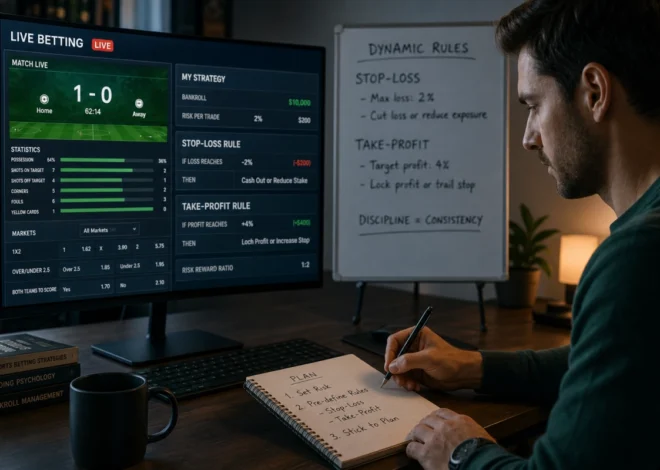
A practical guide to pre-defining and applying dynamic stop-loss and take-profit rules for live betting bankroll management
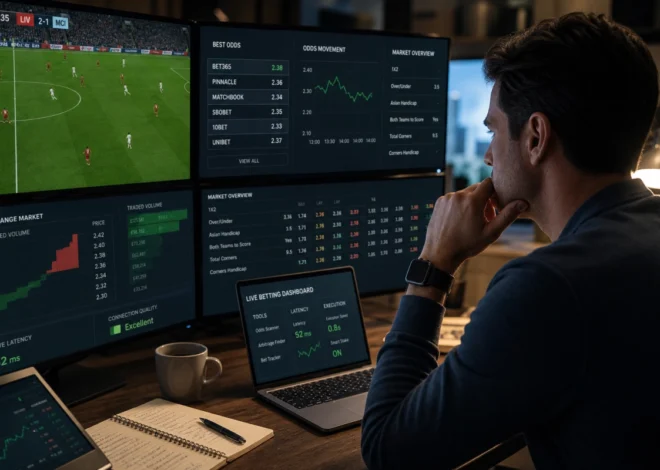
How to find the best live betting odds in-play: tools, latency and smart execution