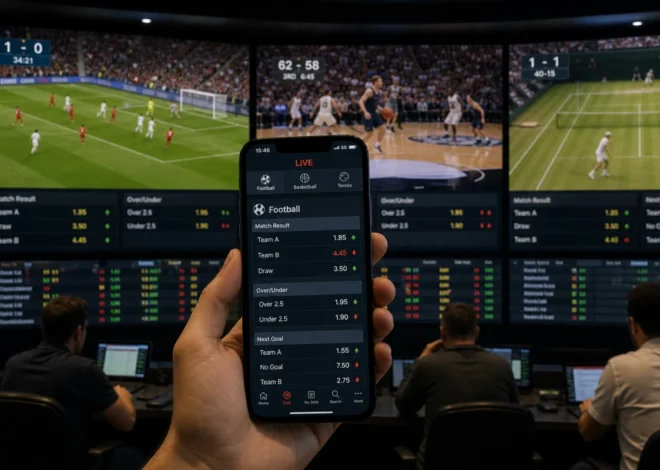
Compare Live Betting Odds Across Bookmakers in Seconds
Why you should compare live odds before placing in-play bets
When you bet in-play, every second can change the expected value of a market. You need to know how different bookmakers price the same event so you can pick the best return and manage risk. By comparing live odds across bookmakers in seconds, you avoid value leakage, reduce the impact of latency, and can exploit short windows of opportunity that exist when markets adjust at different speeds.
This approach isn’t about finding a “perfect” price every time. It’s about improving the consistency of your returns and making smarter decisions under time pressure. You’ll learn to spot when a bookmaker’s price is temporarily out of line, when the market consensus is shifting, and when to pass because the margins are too wide.
Understand what makes live odds differ and what to watch for
Key drivers behind divergent live prices
- Information lag: Some bookmakers update faster after events (goals, injuries, cards). If you can see a price before others, you may gain an edge.
- Risk exposure and liability: Operators adjust odds to balance their books. Heavy money on one side can push odds even if the underlying probability hasn’t changed materially.
- Model differences: Firms use varying algorithms, weights, and feeds. Those differences create small but exploitable gaps across the same market.
- Market depth and limits: Smaller books may freeze or widen odds quickly when liquidity is low, while larger firms absorb larger stakes and keep prices steadier.
Practical signals that indicate opportunity or danger
- Sudden drift or spike: A rapid odds move on one bookmaker but not others can indicate an information advantage or a reactive pricing model.
- Consistent outlier: A book that repeatedly offers better odds on the same market may have looser margins or slower hedging — useful if you can stake responsibly.
- Volume indicators: If available, watch market volume or matched bets to distinguish noise from sustained directional movement.
Fast comparison techniques and pre-checks you should run
To compare live odds effectively, prepare a lightweight workflow you can execute in seconds. Start by selecting a small set of bookmakers you trust, and keep a shortlist of the markets you trade most often. Use a browser layout or a multi-feed tool so you can see the same market across providers without switching tabs. Train yourself to scan for three things: the best available price, any significant deviation from the average, and whether placing a stake is allowed at that price (limits or delays).
- Keep stake sizes conservative until you confirm a bookmaker’s live behavior (cancellations, voids, or delays happen).
- Use keyboard shortcuts and pinned tabs to shave seconds off your workflow.
- Note latency — if your connection or device is slow, a faster price won’t help you; prioritize reliability.
Next, we’ll walk through a step-by-step, second-by-second method and a tool checklist so you can compare live odds across bookmakers in real time.
Second-by-second method: how to act when the market moves
When a key event happens (goal, red card, substitution), you often have a 2–12 second window to exploit pricing discrepancies. Practice this routine until it becomes muscle memory.
- Seconds 0–2 — Identify the trigger: Glance at your multi-feed and confirm the event. Don’t react to a single outlier — check two other books immediately to see if the move is isolated.
- Seconds 2–4 — Compare quickly: Look for the best lay-in or back price, measure the deviation versus the mid-market, and confirm the market is still accepting bets (some books temporarily suspend). If the best price is only marginally better, pass.
- Seconds 4–7 — Size and exposure: Decide stake size based on your pre-set rules (see staking section below). Factor in potential voids or delays — trim stakes on books with slower confirmations.
- Seconds 7–12 — Execute and monitor: Place the bet and watch for immediate confirmation. If the bet is delayed, consider hedging on another bookmaker or cancelling equivalent exposure if your platform allows.
- After 12 seconds — reassess: If more books have adjusted, the window likely closed. If your position remains unmatched or partially matched, move to recovery: hedge, cash-out, or accept the reduced edge and close when you can.
Run this sequence at 50% speed in practice matches or low-risk stakes until each step is automatic. The goal is not to be the fastest in absolute terms, but to be fast and disciplined enough to avoid emotional over-betting when markets are chaotic.
Tool checklist: the essentials to compare live odds in seconds
Assemble a compact set of reliable tools so you can react without fumbling. Quality over quantity matters — too many feeds create noise.
- Three trusted bookmakers: One large, one medium, one niche — different pricing styles reduce blind spots.
- Multi-feed display or odds comparison API: A single screen showing identical markets across books saves precious seconds. If you can’t run an API, use pinned tabs with market shortcuts.
- Fast live stream or reliable tick feed: Video is ideal for verifying events; if unavailable, use an accredited tick feed with low latency.
- Latency monitor and connection redundancy: Simple ping tests or browser timestamping to identify slow feeds; a wired connection or a second device as backup is worth having.
- Bet sizing calculator / staking app: Pre-program your stake rules so you don’t waste time calculating under pressure.
- Quick deposit/payment method and pre-funded accounts: Avoid being locked out by account limits; keep stakes within what each bookmaker accepts.
- Logging and snapshot tool: Capture screenshots or small logs of odds when you place a bet to review disputes or refine strategy.
Managing stakes, limits, and post-execution risks
Comparing odds is only useful if you manage exposure sensibly. Live markets are messy — prepare for voids, partial matches, and limits.
- Fixed fraction staking for live trades: Use a smaller percentage of your bankroll for in-play edges than pre-match bets. Consider 0.25–0.75% for rapid trades depending on confidence.
- Limit-aware sizing: Stake smaller on books that commonly restrict winners; gradually increase after confirming execution consistency.
- Hedging rules: If a position is left vulnerable by a delayed or unmatched stake, have a predefined threshold at which you hedge (eg, loss exposure > X).
- Dispute and cancellation protocol: Keep a checklist: record time-stamps, take screenshots, and follow the bookmaker’s dispute flow immediately if a bet is voided incorrectly.
These operational safeguards preserve your edge over time — speed wins moments, but discipline wins the long-term battle.
Putting it into practice
Speed and discipline are a muscle: build them through short, focused practice sessions, consistent record-keeping, and iteration. Start with low stakes, log every trade with timestamps and screenshots, and review sessions weekly to spot recurring execution issues (latency, voids, limits). Refine your shortlist of bookmakers as you learn which ones reliably execute your live stakes and which regularly create operational headaches.
Maintain a simple routine: warm up with a pre-match checklist, run your second-by-second sequence in low-pressure matches, and only scale size once execution is consistent. If you need a quick tool reference for comparing market prices, consider established odds comparison platforms—but always validate live behavior yourself before increasing exposure.
Finally, protect your bankroll and comply with local regulations: use conservative staking, monitor limits, and seek help if betting is causing harm.
Frequently Asked Questions
How many bookmakers should I compare when trading live markets?
A practical starting point is three: one large (stable pricing), one medium (balanced liquidity), and one niche (potential outlier advantages). This mix reduces blind spots while keeping your workflow manageable. Expand only if you can monitor additional feeds without slowing decision time.
What stake size is appropriate for in-play, short-window trades?
Use a smaller fraction of your bankroll for rapid in-play trades than for pre-match bets—commonly 0.25–0.75% per trade depending on confidence and venue reliability. Reduce stakes on bookmakers with known delays, partial matches, or restrictive limits until you confirm consistent execution.
What should I do if a live bet is voided or removed after execution?
Collect evidence immediately: timestamps, screenshots, and any confirmation messages. Contact the bookmaker through their dispute channel and provide the documentation. Log the incident in your records and adjust future stake sizing or remove that bookmaker from your shortlist if the issue recurs. If resolution stalls, escalate via regulatory bodies available in your jurisdiction.

Related Posts
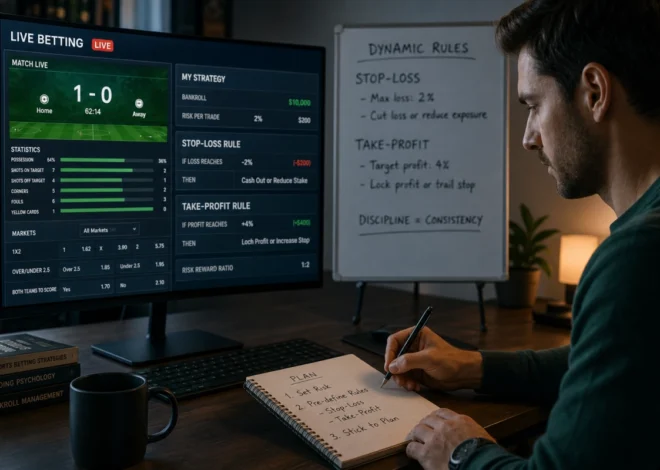
A practical guide to pre-defining and applying dynamic stop-loss and take-profit rules for live betting bankroll management

How to find the best live betting odds in-play: tools, latency and smart execution