A practical, in-play guide to betting on red cards: spotting live signals and choosing markets
Betting on red cards live: how to spot signals that matter
Betting on red cards during a football match is a niche but tradable in-play opportunity when a bettor recognises clear live signals and understands market responses. This guide explains what to watch on the pitch, how in-play markets work, and which markets typically offer the best value as a red-card becomes likely. The focus is practical: recognise repeated fouls, bookings, tactical substitutions and time-pressure moments, then act with discipline and risk control.
What “live odds” and “in-play markets” mean for red-card bets
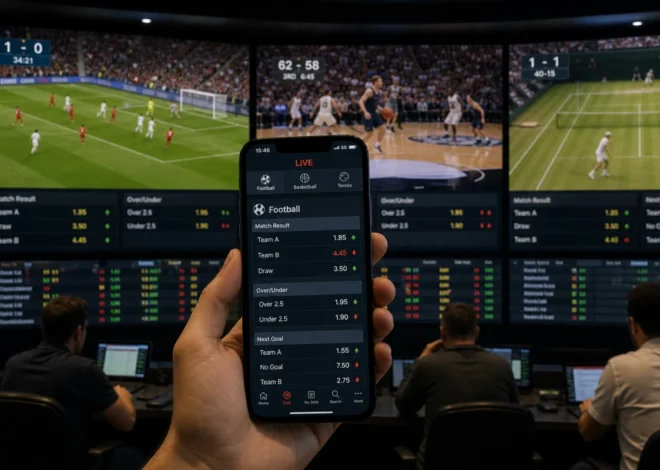
Live odds are bookmaker prices that change during a match to reflect new information — events, momentum swings, injuries, tactical changes and statistical updates. In-play markets cover bets you can place once the game has started: “next card”, “first/next red card”, “red card anytime”, and half- or extra-time red-card markets.
Beginners should note the difference between two common options:
- Next card/next booking – short-term, reacts quickly after a foul or booking; higher turnover and faster volatility.
- Red-card market (anytime) – longer horizon, price reflects probability of a dismissal across the remainder of the match and is slower to move.
Live signals that increase the probability of a red card
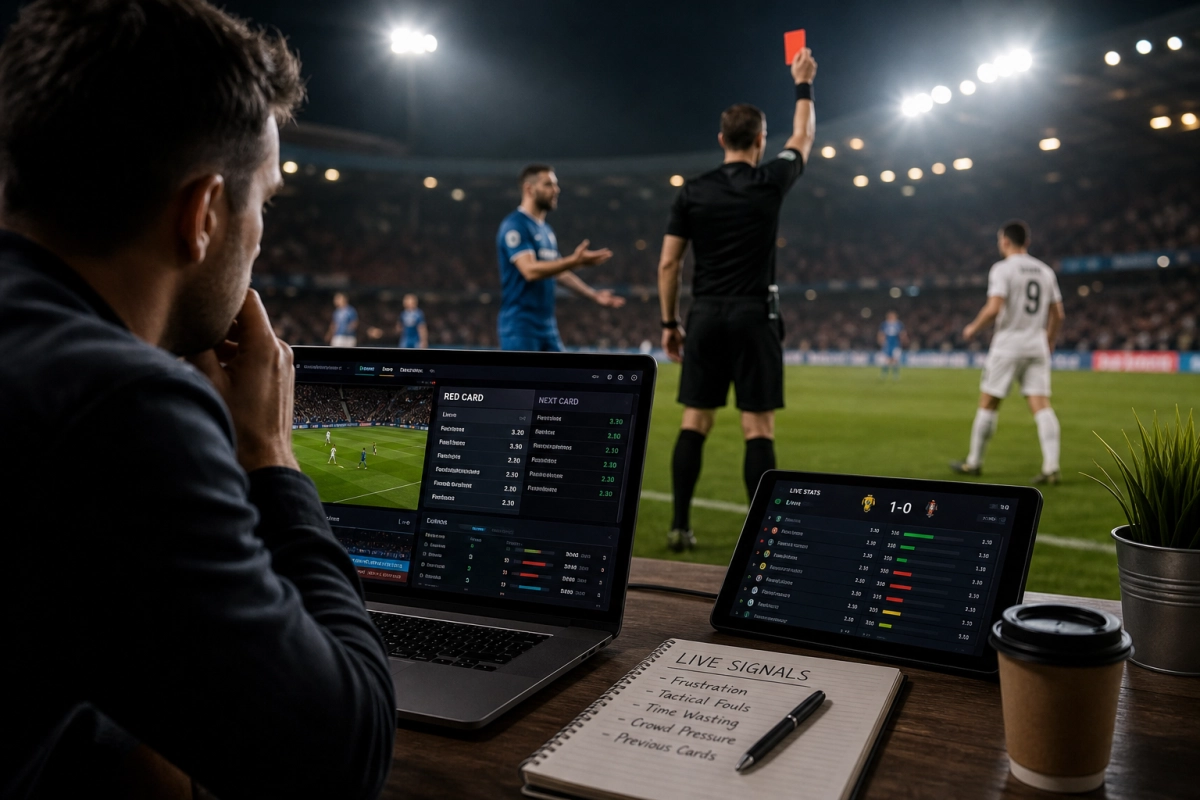
Successful in-play trading depends on spotting patterns, not guessing. Key signals to watch:
- Repeated fouls in the same channel — a defender repeatedly hacking down a winger often leads to escalation.
- Accumulating bookings — a player on a yellow who commits further tactical fouls becomes a liability.
- Tactical substitutions — a fresh, aggressive substitute entering late can provoke confrontations or tactical stops.
- Time pressure and scoreline — trailing teams late in the game commit riskier challenges; referees may lose patience after continuous stoppages.
- Referee profile and prior leniency — if the referee has shown strict enforcement of dissent or persistent fouls, escalation to a red is more likely.
Example scenario: in the 62nd minute a full-back already on a yellow repeatedly fouls a fast winger. The home team is pressing for a goal. Odds for “next card” and “anytime red” will typically shorten; the “next card” market spikes almost instantly while “anytime red” shortens more gradually.
Choosing the best in-play markets and reading odds reactions
Select markets based on timing and signal strength. If a clear flashpoint appears—yellow-carded player committing another foul—a short-term “next card” or “next booking/red” market can offer immediate value. For broader situations (sustained aggression, tactical desperation), the “red card anytime” or half-time red-card market may be preferable.
Interpret odds reactions like this:
- Odds shortening quickly (price falls): market expects the event soon. Consider whether the signal is genuine or crowd-driven.
- Odds steady despite signals: suggests bookmakers or sharp traders are unconvinced — reassess the signal strength.
- Odds lengthening after a card is shown: immediate overreaction can create opportunistic hedging or small scalps.
Always pair market reads with responsible bankroll rules: set fixed limits, stake percentages and avoid impulsive chasing after losses.
Next, the guide will cover dynamic stake-sizing, cash-out and hedging techniques, plus detailed match examples showing step-by-step trades and volatility control.
Dynamic stake‑sizing and position management during a match
Sizing is where strategy meets money management. Treat red‑card trades as high-volatility, low-frequency bets and size accordingly. Use simple, repeatable rules so emotions don’t drive stakes mid-match.
Practical sizing rules
– Base percentages: for an “anytime red” back, consider 0.5–1.0% of bankroll; for a “next card/next red” short-term scalp, 0.25–0.5%. These are starting points — tighten them if you’re new or the game feels noisy.
– Scale in, don’t all‑in: if a signal strengthens (repeat foul, second yellow shown to same player, fresh aggressive sub), add a second equal stake rather than doubling. Cap total exposure to a hard limit per match (example: 2–3% of bankroll).
– Time sensitivity: as minutes run down, probability weight changes. Late-game flashpoints (75’+) are more likely to produce a dismissal but have a shorter window; you can justify slightly larger stakes late if the signal is strong, but keep an absolute max exposure.
– Stop‑loss and take‑profit: set a per‑match loss cap (for example, 3% bankroll) and a take‑profit threshold per market (e.g., if cash-out offers 70–80% of potential profit, consider locking). Discipline here prevents a small losing run from ballooning.
Example trade: scaling into a “next card”
– Bankroll = £2,000. Base next‑card stake = 0.4% = £8.
– 62′: a yellowed full‑back repeatedly fouls; “next card” is 2.4. Back £8 (potential profit £11.20).
– 66′: another cynical foul by same player; market confirms signal. Add a second stake £8 at 2.0 (potential profit £8).
– Total staked = £16. Max exposure limited to 0.8% of bankroll. If the card arrives you net either £11.20 (first hit) or £8 (second hit) depending on which bet wins — both are small, controlled wins that fit the risk budget.
Using cash‑out and hedging to manage volatility — two realistic scenarios
Cash‑out and exchange lays let you lock profits or cut losses once the market moves. They’re not guaranteed value — use them when they improve your risk/return relative to holding on.
Scenario A — cash‑out to lock profit
– Placed £20 on “red card anytime” at 6.0 (£100 potential profit).
– After 10 minutes of escalating fouls the bookmaker offers a cash‑out of £30. That’s a 50% return on stake, but it trades off the remaining upside.
– Decision rule: if cash‑out >= 50–70% of max profit and the remaining likelihood of the event is uncertain (referee lenient, stoppages ending), take it. You lock a small profit and preserve bankroll for better edges.
Scenario B — hedge with a lay on the exchange
– Backed “red anytime” £15 at 8.0 (potential profit £105).
– A reckless challenge and visible dissent make the market shorten to 3.5, and you can lay at 3.6 to neutralise risk.
– Lay calculation (simplified): to lock a small profit, place a lay that results in equalised outcomes. Lay stake = (back stake × back odds) / lay odds = (15 × 8) / 3.6 ≈ £33.3 liability. After fees you’ll have a small guaranteed return or minimal loss depending on exact numbers.
– If you don’t want full neutralisation, lay partially to reduce variance but keep upside.
A few operational tips
– Practice lay math off‑market or with a small exchange account until the numbers become second nature.
– Prefer partial cash‑out when you want to keep a slice of upside; prefer full lay when you want certainty.
– Always compare the cash‑out value to an equivalent lay price on an exchange — sometimes the latter gives better risk control.
These tactics — disciplined sizing, scaling in, and timely cash‑out/hedging — are the toolkit for turning red‑card intuition into repeatable, low‑regret trades.
Quick pre‑place checklist
- Confirm the on‑field signal: repeated foul, a player already booked, or a fresh aggressive sub.
- Check the referee’s carding tendency and previous decisions in the match.
- Assess the market: liquidity, available prices, and how quickly the “next card” or “anytime red” is moving.
- Decide stake size per your sizing rules and max exposure for the match.
- Have your exit plan ready: target cash‑out level, lay price for hedging, or full hold if the edge is convincing.
- Ensure you’re mentally fresh — avoid live trading when distracted or tilted.
Post‑match review routine
- Log the trade: timestamp, signal(s), market entered, odds, stake, cash‑out/lay actions and final P/L.
- Note whether the signal was objective (repeatable) or discretionary (gut feeling).
- Compare decision against your rules: did you scale in correctly? Did you breach your exposure cap?
- Identify recurring errors and adjust thresholds or sizing rules rather than chasing short‑term results.
- Build a sample of trades before changing strategy — red‑card events are sparse and noisy.
Final notes on discipline, practice and realistic expectations
Betting on red cards in‑play is a specialist activity that rewards preparation, discipline and conservative sizing more than bravado. Treat it as a trading system: define clear entry signals, cap exposure, practice hedging and cash‑outs in low‑stakes environments, and keep a meticulous record of trades so you can learn from patterns rather than emotions. Expect volatility and long stretches without clear edges — that’s normal. Your edge comes from identifying high‑probability flashpoints and managing risk when markets move against you, not from trying to predict every dismissal.
Start small, focus on process over results, and only increase exposure once you have consistent, documented improvements. If you maintain discipline and iterate on real match data, red‑card trading can be a controlled, repeatable part of an in‑play toolkit rather than a high‑variance gamble. Stay patient, protect your bankroll, and let the signals—not the noise—guide your decisions.

Related Posts
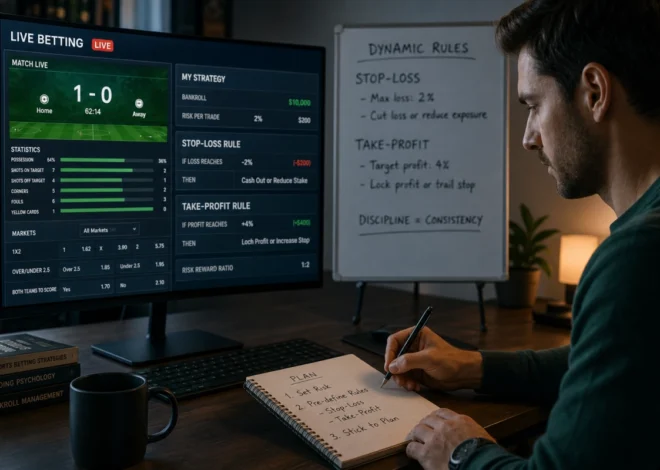
A practical guide to pre-defining and applying dynamic stop-loss and take-profit rules for live betting bankroll management

How to find the best live betting odds in-play: tools, latency and smart execution