Practical Phase-by-Phase In-Play Betting Guide — Which Markets to Prioritise and How to Size Bets
Live, phased approach to in-play betting: what to watch and why it matters
In-play betting changes the moment the referee blows the whistle. This guide explains how to prioritise in-play markets and size/stage bets during the early phase of a match, helping readers make faster, more disciplined decisions. It covers core concepts such as live odds, in-play markets and match momentum before giving sport-specific, practical examples for football, basketball and tennis.
How in-play betting works and the key terms every bettor should know
In-play betting (also called live betting) means placing wagers after the event has started. Odds update continuously based on the score, time remaining, statistical feeds and market money. To act confidently, a bettor should understand basic in-play terms:
- Live odds: Real-time prices offered by bookmakers reflecting the perceived probability of outcomes.
- In-play markets: Available bet types during a match — examples include match winner, totals (over/under), handicap, next goal/point, corners and live props.
- Cash out: A bookmaker feature that lets bettors settle a live position before the final outcome (a convenience, not a guarantee of profit).
- Match momentum: Observable swings in control (possession, scoring runs, pressure) that often move odds quicker than the clock.
- Handicap: A way to level the field in-play when one side dominates (e.g., -1.5 goals or +7.5 points).
Successful live betting balances speed with analysis: monitor live statistics, team tactics, substitutions, fatigue and situational factors (weather, referee style). Always decide stake size before acting and never chase losses.
Early-game priorities: where to bet and how much to stake
The opening phase of a match (first 10–20 minutes in football, early minutes/first quarter in basketball, opening service games in tennis) is primarily about information gathering. Odds can swing rapidly; a conservative, staged approach preserves bankroll while exploiting short-term value.
Practical stake guidance
- Use a smaller initial stake: 1–2% of bankroll on exploratory in-play bets to gather info.
- Stage increases only after confirming patterns (e.g., sustained possession, early foul accumulation): raise to 2–4% for clearer edges.
- Avoid large commitments until the match state clarifies (e.g., a clear momentum swing or confirmed injury).
Football — early-game markets and examples
- Prioritise: next goal (short windows), total corners, and Asian handicap when a favourite starts aggressively.
- Example: If an underdog dominates possession first 15 minutes but the score is 0-0, a small stake on “under 1.5 goals” is risky; instead prefer a low-stake “next goal” or corner market while monitoring shots on target and substitutions.
Basketball — early-game markets and examples
- Prioritise: quarter lines, live spreads and player props (minutes and early foul trouble affect lines quickly).
- Example: A key scorer picks up two early fouls — consider a small stake on the opponent covering the quarter spread and reduce exposure to that player’s points market.
Tennis — early-game markets and examples
- Prioritise: next point/game, serve-break markets and handicaps (games handicap) in the opening set.
- Example: On a fast surface, if the returner wins the first two return games, place a conservative stake on a break-of-serve in the next game while watching serve speed and first-serve percentage.
The early phase is about preserving capital and collecting live evidence. The next section explains how to shift strategy during settled play and respond to clear momentum swings.
Settled play: which markets to prioritise and how to scale stakes
Once the initial noise clears (possession patterns set, rotations settled, serve rhythm established), the match enters a steadier phase. This is when live prices stabilise and you can increase stake size if the evidence supports an edge. The core idea is to scale into higher-conviction positions rather than leap in with a single large bet.
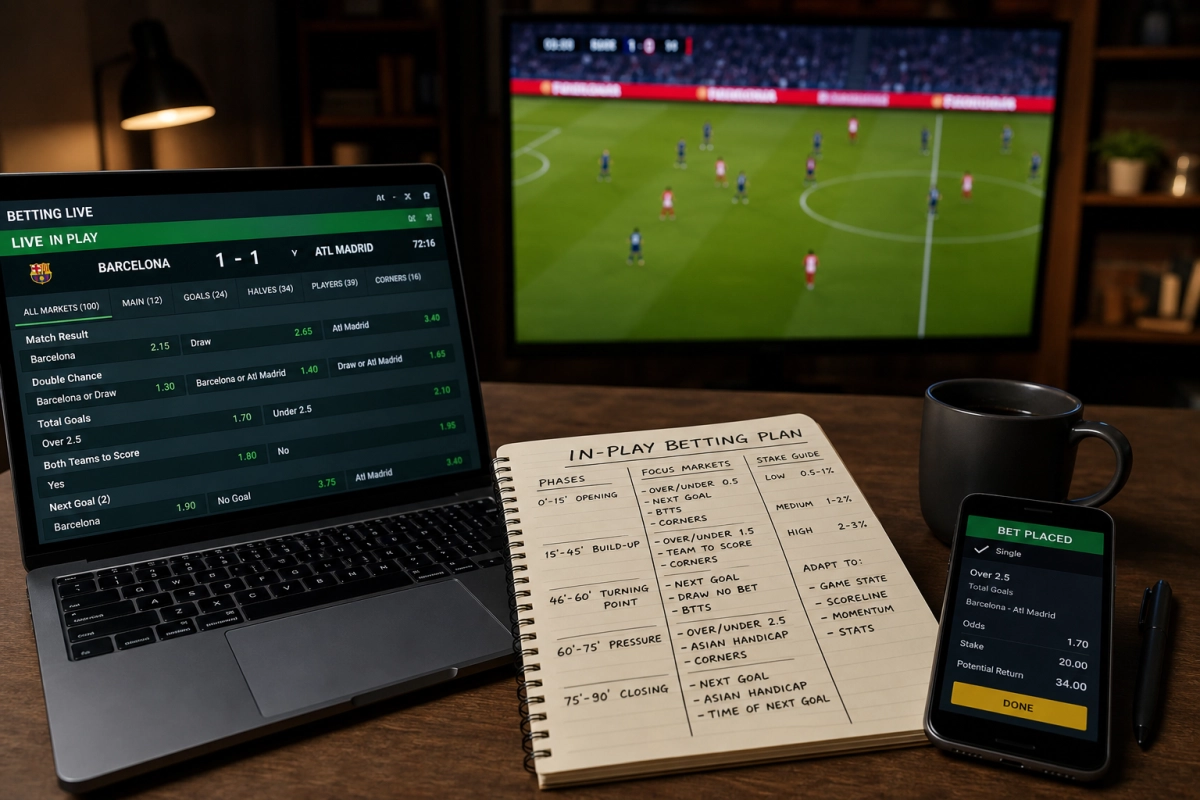
- Stake laddering: Move from exploratory (1–2%) to moderate stakes (2–4%) in 1–2 increments as indicators confirm. For a clear, sustained advantage — for example, a favourite bossing possession and creating high-quality chances — a final leg at 4–6% may be justified.
- Markets to target: In settled play favour markets that reflect sustained performance: totals (over/under), handicaps, quarter/half lines in basketball, and set or game handicaps in tennis. These react to sustained patterns rather than single events.
- Layering exposure: Use partial cash-outs or contra bets to lock profit while keeping upside. If you backed a team pre-match and they dominate early but the price for outright has lengthened slightly, consider cashing half and leaving the remainder live for the win.
Sport-specific notes:
- Football: Target Asian handicaps and total goals when expected-value indicators (xG, shots on target, corners) consistently favour one side. Scale in as your in-play metrics persist.
- Basketball: Increase stakes on live spreads and totals once rotations and foul patterns stabilise; sustained bench rotations or an injured starter justify an upward stake adjustment.
- Tennis: Favor set handicaps or next-set markets after one player establishes serve return dominance. Increase stake after multiple confirmed breaks or a drastic drop in first-serve percentage.
Momentum swings: recognise, size and hedge quickly
Momentum swings are high-opportunity, high-risk moments where odds move faster than underlying probability. The trick is to distinguish genuine swings (sustained pressure, scoring runs) from short blips (lucky shots, single turnovers).
- Detection rules: Look for multi-factor confirmation — e.g., sustained possession + shots on target + attacking substitutions. In basketball, a 10–0 run with the opponent’s key scorer benched is a stronger signal than two quick steals alone.
- Sizing: Use 2–4% stakes on early signals, escalating to 4–6% only if the swing continues for several possessions/games. Never exceed your pre-set maximum per-swing exposure.
- Hedging and quick exits: Be ready to hedge by taking the opposing market at reduced size, or use cash-out to preserve profit. Hedging is especially useful when market overreaction creates a favourable lay price.
Examples:
- Football: If an underdog scores and then presses aggressively, consider a small-to-moderate stake on “next goal” or the handicap swing while watching substitutions.
- Basketball: During a scoring run, back the run-extending team’s live spread; if the momentum stalls, hedge with a smaller contra bet on the opponent to limit downside.
- Tennis: After a service break and medical time-out for the server, a short, staged stake on the breaker holding the next service game can capture momentum without overcommitting.
Halftime/interval resets and late-stage closing strategy
Intervals are a strategic reset: coaches change tactics, players rest, and bookmakers overhaul prices. Use the break to reassess and prepare for the closing phase where time sensitivity becomes paramount.
- Halftime actions: Review live stats, confirm or refute early hypotheses, and pre-plan late-game triggers. If you enter the second half with conviction, size up modestly (2–5%) based on renewed information; avoid speculative bets driven only by emotion.
- Late-stage priorities: In the last 10–15 minutes (football), final quarter (basketball), or decisive final set/games (tennis), prioritise markets where time pressure matters: next goal/point, remaining-time totals, and small handicap markets. Odds react strongly to clock and score — exploit that with clear, disciplined sizing.
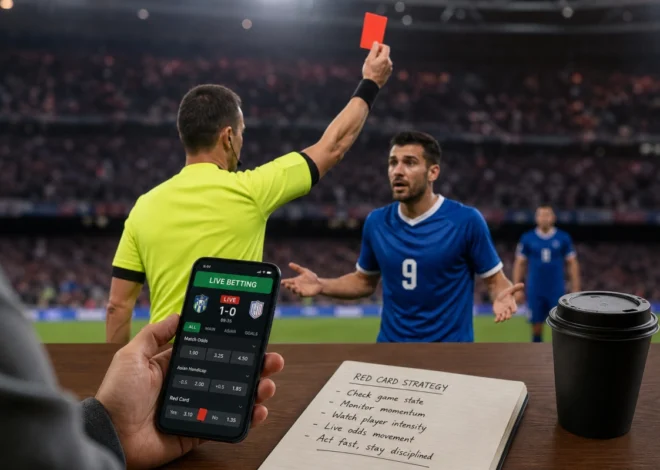
- Protecting capital: Reduce exposure as uncertainty rises (e.g., red cards, injuries, poor visibility). When behind, resist chasing with oversized bets; instead, use targeted, small-stake contras or hedges to manage risk.
A short in-play checklist
- Set a pre-match plan: decide which markets you’ll consider and your initial exploratory stake (1–2% bankroll).
- Use stake laddering: increase in small, predefined increments (e.g., 1% → 2% → 4%) only after confirming signals.
- Require multi-factor confirmation for momentum trades (possession, shots/attempts, substitutions, foul/timeout patterns).
- Define max exposure per swing and per match — never exceed these limits even in high-pressure moments.
- Use half-cash or partial hedges to lock profit while preserving upside when the market overreacts.
- Treat halftime/interval as a reset: review evidence, adjust stakes modestly, and set late-game triggers in advance.
- Prioritise time-sensitive markets late in the event (next goal/point, remaining-time totals, small handicaps).
- Log trades and outcomes for regular review — focus on process metrics (stake sizing, signal quality) over single results.
Staying disciplined in live markets
Live betting rewards preparation and temperament more than quick reflexes. Keep rules simple, enforce your stake and exposure caps, and rely on repeatable signals rather than gut reactions. Expect variance and treat each live decision as part of a long-term process: if a trade violates your plan, treat it as data, not a loss to chase. Maintain records, review regularly, and iterate your playbook based on hard evidence. Over time, disciplined sizing, clear triggers and steady emotional control will separate transient luck from sustainable edge.