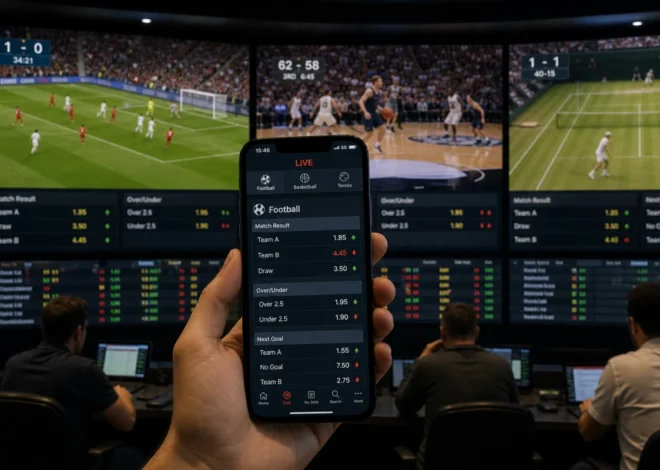

Top Sites for Live Odds Today: Fast, Accurate Real-Time Sports Odds
Why live, real-time odds matter for your sports betting edge
When you follow live betting markets, seconds can change the value of a wager. You rely on odds feeds that update instantly as injuries, momentum swings, or market money shift. If you want to beat the books or simply protect your bankroll, you need to understand why speed and accuracy in live odds are non-negotiable.
Fast odds give you the chance to lock in fair prices; accurate odds prevent you from chasing phantom value. In practical terms, that means the site you choose should refresh prices with minimal latency, correctly translate different formats (American, decimal, fractional), and reconcile data across multiple markets (moneyline, spreads, totals, props). You’ll be using these numbers to size bets, hedge positions, or exploit arb opportunities — so clarity and reliability directly affect profitability.
How latency and data integrity influence your decisions
Latency is the delay between an event (a goal, foul, or substitution) and when the odds reflect that event. Even a few seconds of lag can flip a +250 opportunity into a -120 liability. Data integrity refers to how complete and error-free a feed is: missing market updates or inconsistent lines can mislead you into poor choices.
- Millisecond updates: Professional bettors often require feeds that update in milliseconds, while recreational users can tolerate slightly longer refresh intervals.
- Source transparency: Know whether odds come directly from sportsbooks, aggregated exchanges, or third-party data providers. Direct feeds tend to be more reliable.
- Market depth: Look for platforms that cover pregame and in-play markets, plus specialized props and player lines for the sports you follow.
What to look for when choosing a live-odds site
Not all odds platforms are built the same. When evaluating options, you should compare three practical dimensions: speed, accuracy, and usability. Those factors determine how quickly you can act and how confidently you can interpret the numbers.
- Refresh rate and sync: Check whether odds refresh automatically, how often they poll the server, and whether timestamps are visible so you can verify freshness.
- Cross-sports coverage: If you bet multiple sports, prioritize sites that maintain consistent update speeds across leagues — from NFL and NBA to niche live markets like tennis and esports.
- Custom alerts and filters: Filters let you monitor only the markets you care about; alerts notify you of line moves that meet your entry criteria.
- Historical movement and context: Platforms that show recent line history make it easier to judge whether a move reflects meaningful information or temporary market noise.
By focusing on these features, you’ll narrow the field to platforms that truly support fast, informed betting. In the next section, you’ll get a ranked list of the top live-odds sites today, with side-by-side comparisons of speed, coverage, and practical tools to help you pick the right provider for your strategy.
Top live-odds sites today (ranked for speed, coverage, and tools)
Below are the platforms that consistently stand out in live markets. Each entry includes what it does best and the type of user who benefits most.
-
OddsPortal — Speed & wide aggregation
Known for fast aggregation across dozens of bookmakers, OddsPortal is ideal for value hunters who need to scan multiple books quickly. Strengths: broad market coverage, clear line-history charts, and consistent refresh rates. Best for: bettors who compare prices across bookmakers for arbs and pre/post-live movement analysis. -
Betfair Exchange — Real liquidity signals
As a betting exchange, Betfair shows true market-driven prices and available matched volume. Strengths: millisecond-level price updates, partial fills, and visibility of market depth. Best for: advanced traders and scalpers who rely on liquidity and execution. -
Pinnacle — Sharp lines & stable in-play feed
Pinnacle is renowned for low margins and reliable, fast in-play feeds. Strengths: consistent pricing quality, transparent limits, and quick line adjustments to game events. Best for: professional bettors focused on efficiency and long-term ROI. -
Bet365 — Comprehensive in-play markets
Bet365 combines rapid live updates with one of the widest selections of prop and micro-markets. Strengths: excellent coverage across mainstream and niche sports, integrated streaming, and live statistics. Best for: recreational and semi-pro bettors who value variety and live data context. -
DraftKings / FanDuel (US-focused) — User-friendly and fast
Both platforms have improved in-play latency to compete with international books. Strengths: polished UIs, push-alerts, and strong mobile performance. Best for: U.S. bettors prioritizing ease of use and quick mobile execution. -
OddsChecker (aggregator) — Simplicity + alerts
OddsChecker offers cross-book comparisons with configurable alerts for line moves. Strengths: clean interface, custom filters, and fast email/push notifications. Best for: bettors who want an easy way to monitor favorite markets without multiple logins.
Note: No single site is perfect for every strategy. Many bettors combine an aggregator (OddsPortal/OddsChecker) with a sportsbook and an exchange to balance speed, liquidity, and coverage.
Using live-odds platforms to execute winning strategies
Having access to fast odds is only half the battle — how you use them determines edge. These practical tactics will help you convert timely data into better decisions.
- Set focused alerts: Configure alerts for specific thresholds (e.g., spread moves > 1.5 points, moneyline swing > 100). That reduces noise and gets you into trades you’ve pre-vetted.
- Use timestamps and multiple sources: Always check the timestamp on an odds feed. When making split-second calls, cross-check the same market on an exchange to confirm liquidity and the direction of market pressure.
- Pre-define entry/exit rules: In-play volatility is deceptive. Define stop-loss and cashout rules ahead of time — for example, hedge if liability exceeds X% of bankroll or if implied probability falls below your edge threshold.
- Exploit micro-markets selectively: Props and player lines often lag early in live play. Target micro-markets where you have domain knowledge (e.g., corner markets in soccer or player rebounds in basketball) and act fast.
- Maintain execution readiness: Keep multiple books logged in, use hotkeys or quick-bet features, and prefer platforms with minimal confirmation steps during live bets.
- Record and review: Log timestamps, odds taken, and context (injury, red card, momentum). Post-game review highlights whether your edge came from speed, model accuracy, or simply variance.
These approaches turn raw live-odds feeds into operational advantages — enabling faster hedges, smarter scalps, and more disciplined in-play decisions. In Part 3 we’ll dig into platform pricing, APIs for automated trading, and how to choose the right combination of tools for your bankroll size.
APIs, pricing, and automated trading
If you plan to automate or scale live-betting strategies, APIs and pricing tiers matter. Most professional solutions offer REST or WebSocket feeds: WebSockets provide lower latency and push updates in real time, while REST is fine for periodic polling. Expect commercial data providers to charge by requests, concurrent streams, or per-sport bundles; exchanges and sportsbooks sometimes limit API access to high-volume or partner accounts. Before committing, test a demo or free tier to verify refresh rates, field coverage, and timestamp accuracy.
- WebSocket feeds for millisecond updates; REST for lower-cost periodic checks.
- Watch for rate limits, concurrency caps, and historical-data access if you backtest models.
- Combine an aggregator with at least one sharp book and an exchange to balance liquidity and price discovery.
Putting it into practice
Start small: configure a few focused alerts, log decisions, and compare timestamps across providers before increasing stakes. Use paper-trading or low-stakes live bets to validate execution speed and slippage. When you’re ready to scale, prioritize providers with clear APIs and transparent pricing, and keep a backup source in case one feed lags. For fast cross-book scanning, explore aggregator services like OddsPortal while you build confidence in execution and bankroll management.
Frequently Asked Questions
How quickly do live odds need to update for effective in-play betting?
That depends on your strategy. Scalpers and professional traders typically require millisecond updates via WebSocket or exchange feeds. Recreational bettors and many prop-market players can operate effectively with second-level updates, provided timestamps and refresh indicators are visible so you can confirm freshness.
Are aggregated sites reliable for finding value or should I trust individual sportsbooks?
Aggregators are excellent for discovery and cross-book comparisons, but you should confirm liquidity and executable prices on the target sportsbook or exchange before placing large bets. Aggregators may display best prices that vanish quickly; use them to spot opportunities, then act on books or exchanges with known execution quality.
Should I prioritize exchanges or traditional sportsbooks for live trading?
Exchanges offer transparent market prices and visible matched volume, which is invaluable for traders who need liquidity signals and partial fills. Traditional sportsbooks often provide deeper market coverage and promotions. Many bettors use a hybrid approach: exchanges for execution and price discovery, sportsbooks for specific markets or faster bet placement on mobile. Choose based on liquidity needs and your preferred markets.

Related Posts
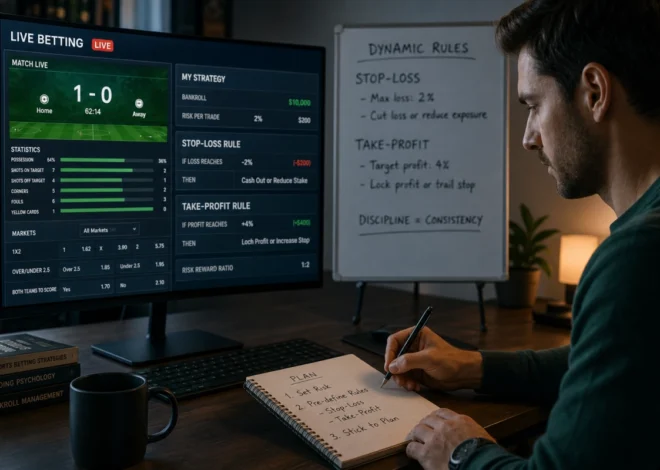
A practical guide to pre-defining and applying dynamic stop-loss and take-profit rules for live betting bankroll management

How to find the best live betting odds in-play: tools, latency and smart execution