
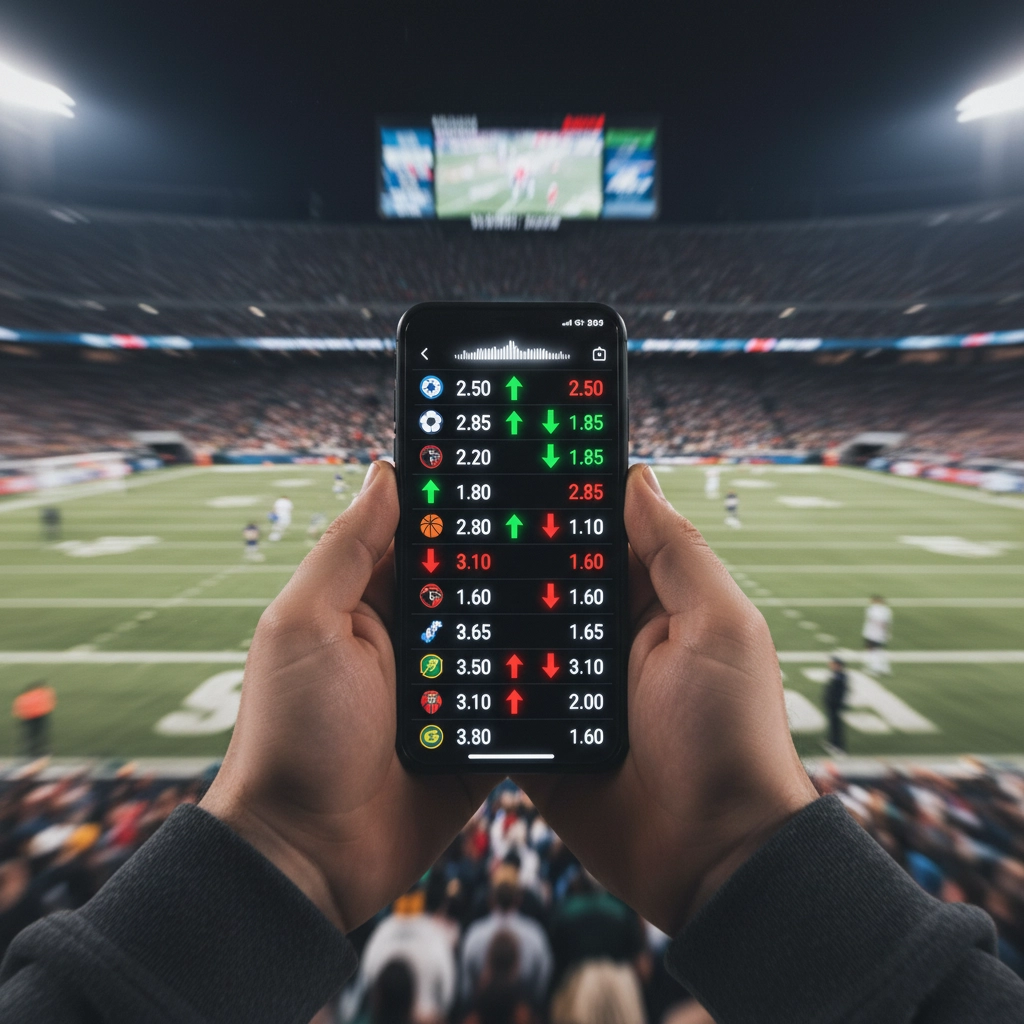
Live Betting Odds Alerts: Get Real-Time Sports Odds Notifications
Why live betting odds alerts matter for in-play success
You already know that live betting can move faster than pre-match markets. When you bet in-play, odds shift with every possession, injury, or sudden momentum swing. Live betting odds alerts give you the split-second edge by delivering those shifts as they happen, so you can act on favorable prices before the market adjusts.
Using alerts turns a reactive experience into a proactive one. Instead of constantly watching multiple matches or refreshing bookmaker pages, you receive targeted notifications based on your criteria. That means you preserve focus, reduce missed opportunities, and can execute trades or stakes when value temporarily appears.
How real-time notifications change your decision-making
- Speed: You’ll get notified the moment odds cross thresholds you set, letting you place or hedge bets quickly.
- Clarity: Alerts summarize the event, market, and price change so you can decide without digging through the full book.
- Focus: By filtering noise, alerts allow you to follow only the matches and markets that fit your strategy.
What a useful live odds alert includes and how it’s generated
Not all alerts are created equal. A practical live betting odds notification should contain concise, actionable information so you can judge value instantly. Typical elements are:
- Event identifier: Teams or players, competition, and time stamp so you know which match the alert applies to.
- Market and side: Which market (e.g., match winner, total goals, spread) and which side moved.
- Old and new odds: The previous price and the updated price that triggered the alert.
- Trigger reason (optional): Some systems attach context such as a goal, red card, or substitution that explains the shift.
- Bookmaker/source: Which provider’s odds changed — helpful when you compare across books or use a specific operator.
Behind the scenes, these alerts are produced by a feed that monitors market data from bookmakers or exchange APIs. Sophisticated services normalize and timestamp the data, apply your filters (minimum change, market type, leagues), and push notifications the instant a rule is satisfied. Latency matters: the shorter the delay between the data source and your device, the more actionable the alert.
Ways you can use alerts to capture value immediately
- Enter a back or lay position when an underdog’s odds briefly shorten after momentum changes.
- Hedge pre-match exposure after a key in-game incident inflates the opposing side’s price.
- Spot arbitrage windows when different books diverge enough to lock profit.
Next, you’ll want to explore the different delivery methods, latency factors, and how to choose an alert provider that matches your speed and market needs.
Delivery methods and notification channels
How an alert gets to you is almost as important as what it contains. Different notification channels suit different workflows — a scalper needs an instant push to their phone or a webhook to an automated bot, while a value bettor might prefer digest emails or desktop pop-ups so they can review multiple opportunities at once.
Common delivery options include:
- Push notifications (mobile): Fast, persistent, and visually prominent. Best for single-event, high-priority alerts where immediate action is required.
- Webhooks / API callbacks: Essential for automated systems. Webhooks let your bot or trading engine execute strategies the moment an alert fires.
- Desktop notifications and browser alerts: Useful for traders monitoring multiple tabs on a workstation; less intrusive than phone pushes but quicker than email.
- Instant messengers (Telegram, Slack, Discord): Good for collaborative teams or for keeping a timestamped chat log of alerts. Bots can format messages and include quick links to the market.
- Email & SMS: Reliable fallbacks for lower-frequency or archival alerts, but usually too slow for scalping or tight in-play windows.
- In-app streams & audible alarms: For professional users, configurable sounds and visual badges reduce missed events during intense sessions.
When choosing channels, think about noise control and escalation. Route only the highest-priority alerts to your phone, while lower-priority or exploratory signals go to a dashboard or chat. Also check whether the provider supports batch bursts, rate limits, and retry logic — a missed webhook or dropped push at a critical moment can turn a good alert into a missed edge.
Latency, data sources, and what impacts reliability
Latency is the invisible variable that determines whether an alert is useful or obsolete. Two systems can report the same odds change, but the one that reaches you 300 milliseconds sooner will usually win the trade. Key technical factors to evaluate are:
- Data ingestion method: Providers using websocket streams are typically faster and more consistent than those polling REST APIs at intervals.
- Source diversity: Aggregating multiple bookmakers and exchanges reduces blind spots and gives earlier signal detection when markets diverge.
- Normalization and timestamping: A quality service standardizes different bookmakers’ formats and applies accurate timestamps so you can compare events across sources.
- Geographic routing and servers: Edge servers and regional POPs lower network latency; look for providers that publish average round-trip times to clients.
- Error handling and fallbacks: Retries, alternate feeds, and queueing prevent data loss during spikes or outages.
Ask providers for measurable metrics: average and 95th-percentile delivery time, uptime SLA, and sample log traces. Consider testing in a live trial to observe how alerts behave under real traffic and whether timestamps on the alert match what you see on the bookmaker market.
Choosing a provider and configuring alerts for your strategy
Not all alert services are equally suited to every bettor. Match the provider’s strengths to your approach, then fine-tune filters to reduce noise and surface genuine value.
- Coverage vs depth: Do you need many leagues or deep market granularity (e.g., player props)? Ensure the provider covers the sports, markets, and bookmakers you trade.
- Customization: Look for thresholds by decimal change, implied probability swing, volume filters, or event context (red card, offside). The more precise the rules, the fewer wasted alerts.
- Integration: If you automate, confirm webhook formats, authentication, and sample payloads. For manual traders, check one-click links that open the market at the bookmaker’s price.
- Pricing and limits: Understand alert quotas, per-market charges, and overage policies. Cheap plans can be restrictive for high-frequency users.
- Trial and backtesting: Use trial periods to simulate your filters and review historical alert logs. Backtest how often your rules would have fired and whether they produced positive edges.
Finally, configure sensible guardrails: minimum change thresholds to avoid micro-fluctuation spam, cooldown windows to prevent repeated alerts on the same event, and combined-signal conditions (e.g., odds move plus event-tag) to improve signal quality. With the right provider and well-tuned rules, live betting odds alerts become a tailored, reliable input to your in-play decision-making toolkit.
Putting alerts into practice
Start small and iterate: run a short live trial with conservative filters, review delivery timestamps and missed alerts, then expand coverage as you gain confidence. Treat alerts as inputs, not decisions — combine them with pre-defined stake rules, bankroll limits, and manual checks where liquidity matters. Monitor provider metrics (latency percentiles, uptime) and keep a log of trades and outcomes so you can objectively measure whether the alerts improve your edge. For a quick primer on the broader market and data providers, see sports betting basics.
Frequently Asked Questions
How fast should I expect live odds alerts to arrive?
Speed varies by provider and delivery method. Websocket streams and direct exchange feeds typically yield the lowest latency (tens to a few hundreds of milliseconds), while polled APIs, email, and SMS can lag by seconds or more. Ask providers for average and 95th-percentile delivery times, and validate them in a live trial before relying on alerts for very short windows.
Can I use alerts to fully automate in-play betting?
Yes — webhooks and API callbacks make automation possible — but plan for idempotency, authentication, rate limits, and latency variability. Automating also requires robust error handling, fallback logic, and compliance with bookmaker terms. Start by simulating strategies with historical alerts and run live tests in a controlled environment before scaling any automated system.
How do I avoid being overwhelmed by too many alerts?
Reduce noise by raising change thresholds, adding cooldown windows, filtering by market depth or event tags (e.g., red cards), and routing only high-priority signals to immediate channels (push/webhook). Use combined conditions (odds move plus event context) and periodically review false positives to tighten rules. A disciplined filter setup preserves focus and prevents alert fatigue.