
How to Shop Live Lines: Compare Betting Odds for Maximum Value
How live lines differ and why shopping them matters to your bankroll
When you bet live, odds change by the second. You can no longer rely on pregame numbers or a single sportsbook’s price. Shopping live lines is the process of checking multiple sportsbooks and taking the best available price at the exact moment you place your wager. Doing this consistently protects your bankroll, boosts your long-term expected value (EV), and reduces the impact of vigorish (bookmaker margin) on your returns.
In practice, live betting rewards speed, discipline, and price awareness. You’ll face rapidly shifting prices after every play, injury, or referee decision. If you want to turn a small edge into a real profit over time, you need to be intentional about where and when you place in-play bets.
Understand the basics: live odds, juice, and market movement
Before you start shopping, make sure you’re fluent in the core elements that determine value during a game.
- Live odds formats: American, decimal, and fractional odds are all used live. Know how to convert between them quickly so you can compare prices across books without hesitation.
- Vigorish (juice): The margin a sportsbook builds into odds varies by market and moment. Two books might show similar implied probabilities, but different payouts once juice is factored in. Prefer the book with the lower effective juice for the same market.
- Market movement drivers: Momentum swings, injuries, weather, and betting volume shift live lines. Recognize which events genuinely alter probability and which merely create temporary price dislocations you can exploit.
- Latency and feed delays: Not all books update at the same rate. A price might still be available on one site while another already reacted — that delay is where value exists, if you can act fast.
Practical checks to run before placing a live bet
When a live betting opportunity appears, run these quick checks to confirm you’re getting value:
- Compare the same market across at least three books; don’t assume the first price you see is the best.
- Convert odds to implied probability and subtract juice to measure true value.
- Look at game context: time remaining, score differential, possession (if applicable), and any pending stoppages that could change the line.
- Confirm your stake sizing fits a live-betting bankroll model — live bets are higher variance, so scale stakes accordingly.
These checks take seconds once you practice them, but they prevent costly emotional bets and keep you focused on long-term return on investment.
Next, you’ll learn the specific tools and real-time tactics to compare live odds across multiple sportsbooks efficiently and lock in the best price when every second counts.
Live-odds tools that give you a real-time edge
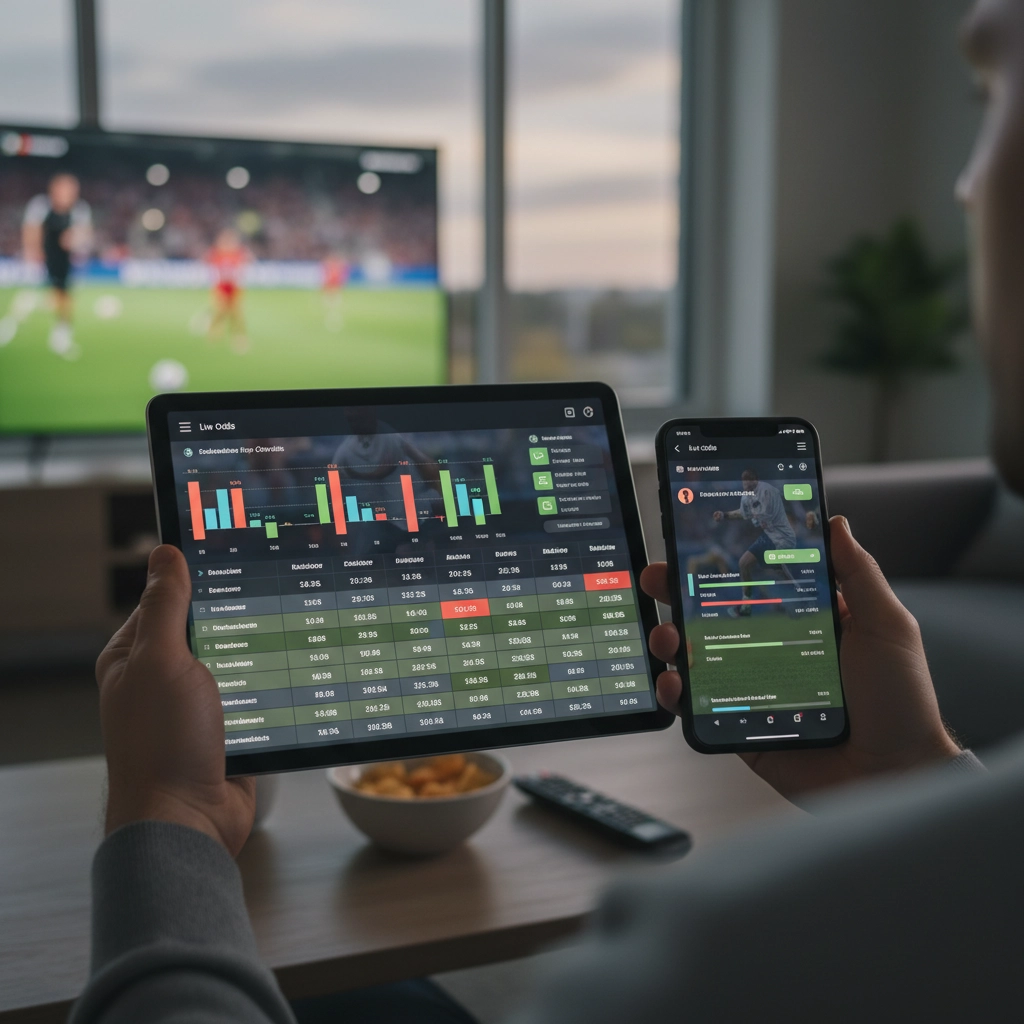
To shop live lines effectively you need instruments that surface price differences instantly. Start with a multi-source odds aggregator that updates tick-by-tick and lets you watch the same market across several books in one view. Look for features such as custom refresh intervals, color-coded best-price highlights, and filters for market type (moneyline, total, spread, props). Complement an aggregator with at least one betting exchange account — exchanges often lead price discovery and let you lay or back at better mid-market prices than retail books.
If you’re technically inclined, subscribe to a low-latency odds feed or API for programmatic monitoring. Even a modest script that converts displayed odds to implied probability and flags deviations beyond a threshold will save seconds and reduce cognitive load. Mobile alert tools (price push notifications) are useful on the move; configure them for only the lines you actively follow to avoid noise.
Don’t ignore manual visual cues: live stat trackers, play-by-play feeds, and coach substitution trackers feed context into price moves. Combine quantitative tools (aggregators, APIs) with qualitative inputs (injury reports, on-court momentum) to decide whether a price gap is a genuine edge or a trap caused by stale data.
Workflow and execution: setup for sub-second decisions
Preparation beats reaction. Build a consistent execution layout: primary execution app (your fastest book) centered, two supporting books visible for quick checks, a live stat/stream window, and an aggregator dashboard. Use multi-tab/browser profiles to remain logged into all accounts and preload betting markets so a single click places the wager. On mobile, pre-authenticate and enable biometric login to shave seconds.
Practice stake sizing and bet placement under time pressure — you’ll find finger slips and confirmation delays are common. Know which books accept in-play bets instantly and which hold for manual review. If possible, fund accounts and maintain small balances across your main books to avoid transfer delays when you need to act. Use keyboard shortcuts, dedicated betting mice, or automated bet slips (where allowed) to minimize execution time.
Account limits and acceptance times matter: some sportsbooks throttle live stakes or require manual acceptance for large wagers. Keep a “go-to” book for larger-size live bets and reserve smaller books for opportunistic value. Finally, log every live bet with timestamped odds — that record is invaluable for post-game EV analysis.
In-play risk controls: hedges, cash-outs, and discipline
Live betting ups variance; protect capital with explicit in-play controls. Define stop-loss thresholds per game and a maximum proportional stake for any single live market. Use partial hedges on exchanges or opposite-side bets at other books to lock profits when lines swing favorably — calculate after-juice returns so hedges don’t eliminate expected value.
Treat cash-out features cautiously: they’re convenient but often priced with a higher effective juice. Use them when they preserve a clear bankroll advantage or eliminate outsized downside, not simply to avoid variance. For correlated positions (e.g., player prop tied to team spread), never hedge blindly — run the correlation math first.
Know when to walk away. If lines move erratically due to officiating reviews, weather, or heavy sharps’ action, step out until the market stabilizes. Consistent discipline in applying these risk controls is what turns momentary edges into durable profits.
Putting your live-line strategy into practice
Start small, stay disciplined, and iterate quickly. Treat the first few weeks as controlled experiments: test one market at a time, keep stakes light, and log every wager with timestamped odds and outcome. Use those records to refine your tooling, stake-sizing, and decision thresholds rather than chasing each swing during a game. Consistency in process—more than short-term wins—creates reliable edges over time.
- Open accounts at at least three books and an exchange; fund them with small amounts to avoid transfer delays.
- Set up an odds aggregator and configure alerts for the markets you trade most often.
- Run timed practice sessions to improve execution speed and firm up stake-sizing under pressure.
- Review your log weekly, track effective juice and realized EV, and adjust which books you favor based on real results.
If you want reference material on market structure and sharp vs. public pricing, see Pinnacle’s betting resources for deeper background and examples.
Frequently Asked Questions
How many sportsbooks should I monitor when shopping live lines?
At minimum monitor three: one primary execution book, one secondary (often with slightly different pricing), and an exchange if available. That gives you a quick cross-section of retail and mid-market prices where value typically appears.
Can I rely on cash-outs to manage live risk?
Use cash-outs sparingly. They are convenient but often include extra margin. Prefer hedges or opposite-side bets that you can calculate after juice; reserve cash-outs for clear bankroll-preservation scenarios where the offered price materially improves your risk profile.
How do I avoid betting on stale prices when lines move fast?
Reduce latency and stale-price risk by using low-latency aggregators, staying logged in to books to avoid re-authentication delays, and favoring books known for faster in-play pricing. If a book consistently lags, remove it from your live execution flow to prevent placing bets on outdated numbers.