
How 12 In-Play Triggers Shift Live Odds — Practical Guide for Football, Basketball & Tennis
How observable in-play triggers change live odds and what bettors should do next
How live odds and in-play markets react (key terms explained)
Live odds are the market’s evolving estimate of outcomes during a match; in-play markets are the bets available while a contest runs (match winner, handicap, totals, next goal/point, and props). Cash out lets bettors lock profit or limit loss before an event finishes.
Key concepts:
- Match momentum: observable shifts in control or scoring tempo that drive odds.
- Handicap: spread applied to balance favorites and underdogs.
- Totals: bets on combined scoring over/under a live line.
- Next goal/point: very short-term markets that react fastest.
- Live statistics: possession, shots, expected goals (xG), turnovers — inputs for models and public reaction.
A practical framework: the 12 in-play triggers to watch
Successful in-play betting focuses on a compact set of observable triggers that reliably alter probabilities. The guide lists 12 triggers; below each is a concise “why it matters,” how odds typically move, a short reaction plan and preferred market/stake guidance.
1) Substitutions — how odds move and what to do
Why it matters: subs change personnel quality and tactics; markets may lag, creating brief value windows.
- How odds move: impact attackers shorten their team’s match-winner and next-goal prices; defenders change handicaps and totals.
- Reaction plan: 1) Confirm role/minutes remaining. 2) Watch immediate stat changes (possession/shots). 3) Use short-term markets (next goal/player-to-score) or small full-match adjustments if the sub is clearly decisive.
- Market choices: football — next goal/match-winner; basketball — player prop/scoring margin. Stake: generally small (0.5%–2%), larger only for clear, immediate impact.
2) Scoring runs and momentum swings
Why it matters: rapid scoring changes tilt expected outcomes and force line moves.
- How odds move: runs (e.g., 10–0 in basketball or quick double-goal in football) shift short-term and sometimes full-match lines.
- Reaction plan: 1) Judge cause (tactics vs fatigue). 2) Prefer short-duration markets (next quarter/goal/game). 3) Wait 1–2 possessions or 5–10 minutes for confirmation to avoid chasing noise.
- Market choices: next-point/next-goal/next-quarter. Stake: modest, scaled to confirmation confidence (0.5%–2%).
3) Timeouts, rotations and tactical pauses
Why it matters: coaches use pauses to halt or reset momentum; lines often adjust quickly if structure changes.
- How odds move: immediate reaction in short-term markets; match odds only if the pause exposes systemic issues.
- Reaction plan: 1) Observe post-timeout lineup/shape. 2) Bet short-term when changes are evident. 3) Reduce size if uncertainty persists.
- Market choices: next possession/quarter or short-term totals. Stake: small-to-moderate (0.5%–2%).
4) Mid-match injuries and medical stoppages
Why it matters: injuries can remove key contributors or force tactical reshuffles; market pricing often lags long enough to exploit.
- How odds move: affected team’s win probability and totals shift; player props void or reset; in tennis, timeouts/visible issues push lines toward the opponent and open retirement markets.
- Reaction plan: 1) Confirm severity (sub vs stretcher). 2) Evaluate replacement quality and time remaining. 3) Act quickly on short-term markets if books are slow; adjust full-match positions for permanent changes.
- Market choices: next goal/next game, match-winner, handicap; tennis — retirement and next-game. Stake: scale by impact and confirmation (0.5%–3%).
5) VAR/penalty reviews and disputed decisions
Why it matters: reviews and penalties are high-variance events that materially change expectations and create volatile price swings.
- How odds move: confirmed penalties/goals trigger sharp shifts; during reviews lines can drift as uncertainty is priced.
- Reaction plan: 1) Avoid aggressive positions while review is pending unless you have clear, fast info. 2) If a penalty is awarded, target immediate short-term markets before full adjustment. 3) After decisions, reassess momentum and avoid public overbet traps.
- Market choices: next goal, correct score, match-winner, totals. Stake: cautious into reviews (0.5%–1%); larger on confirmed, balanced-match opportunities (2%–3%).
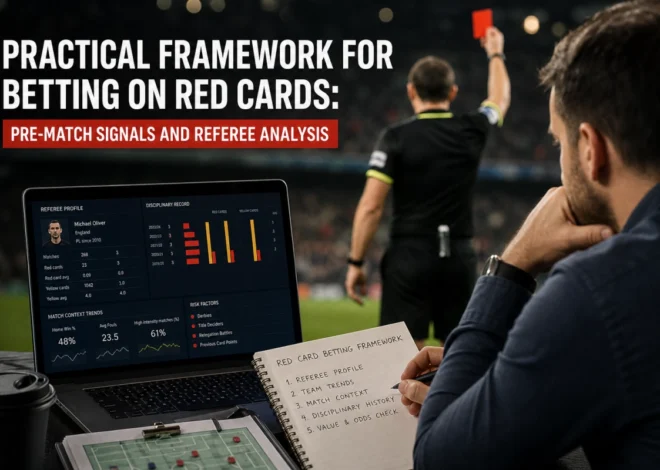
6) Red cards, ejections and player dismissals
Why it matters: losing a player is a structural change that alters possession, pressing and scoring rates; timing matters greatly.
- How odds move: opponents’ win chances and handicaps typically improve; totals often fall if the leading side is reduced.
- Reaction plan: 1) Note when the red occurred and which role was lost. 2) Act fast on in-play handicaps/next-goal lines if the market underreacts. 3) Reduce size for late-game dismissals or conservative immediate substitutions.
- Market choices: handicap, match-winner, next-goal. Stake: bigger for early, game-changing reds (2%–4%), smaller late (0.5%–1%).
7) Coaching instructions and visible tactical shifts
Why it matters: explicit tactical changes (pressing higher, formation switches) modify chance creation and defensive exposure.
- How odds move: probabilities and player props reprice as roles change.
- Reaction plan: 1) Confirm change by watching positioning. 2) Wait one or two possessions for confirmation. 3) Use short-term markets and scale into full-match plays only if the shift persists.
- Market choices: match-winner, team total, player shots/assists. Stake: 0.5%–3% depending on clarity and duration.
8) Service breakdowns and return pressure (tennis)
Why it matters: repeated return dominance increases break probability and swings set/match lines quickly.
- How odds move: returner’s next-game and match-win prices shorten; games totals adjust.
- Reaction plan: 1) Track return points won and second-serve vulnerability. 2) Use next-game or break markets until pattern is confirmed. 3) Avoid betting holds when returner dominates.
- Market choices: next game, next server broken, set/match winner. Stake: 0.5%–2% by surface and confirmation.
9) Fatigue signs and body language
Why it matters: visible exhaustion increases mistakes and reduces performance, impacting scoring probability and injury risk.
- How odds move: totals and win probabilities drift; error-related props spike.
- Reaction plan: 1) Look for repeated late-game missed plays or slowed execution. 2) Confirm across possessions/games. 3) Favor short-duration markets and reduce stakes if uncertain.
- Market choices: team/player totals, next-goal/next-game. Stake: 0.5%–2% depending on persistence.
10) Weather, pitch and surface changes
Why it matters: sudden environmental shifts alter ball movement and scoring rates; in tennis, wind/sun can dramatically affect serves and returns.
- How odds move: totals and match lines adjust quickly; sides favoured by new conditions gain value.
- Reaction plan: 1) Confirm change and expected duration. 2) Evaluate which side benefits. 3) Use short-term markets first, then full-match if conditions persist.
- Market choices: totals, match-winner, serve/return props. Stake: 0.5%–3% based on clarity and persistence.
11) Statistical shifts (possession, xG, turnover rates)
Why it matters: abrupt divergence in live metrics often precedes scoring changes; books and public traders react to these feeds.
- How odds move: lines reprice when live xG or pressure metrics deviate from pre-game baselines.
- Reaction plan: 1) Monitor trusted feeds and set quantitative thresholds (e.g., sustained xG advantage). 2) Act on short-term markets when multiple stats confirm. 3) Avoid overbetting single-metric noise.
- Market choices: next goal/point, team totals, handicaps, player props. Stake: 1%–3% when multiple stats align; smaller for single-metric signals.
12) Fouls, accumulation and referee tendencies
Why it matters: a whistle-happy ref changes game rhythm, stoppages and set-piece chances—altering totals and card markets.
- How odds move: card markets and totals adjust; frequent stoppages can reduce scoring tempo or increase penalty chances.
- Reaction plan: 1) Observe early whistle patterns for bias. 2) Use card/foul props and adjust totals. 3) Scale down if the pattern is inconsistent or later changes.
- Market choices: card markets, match totals, foul-count props. Stake: 0.5%–2% by clarity.
Practical closing notes for disciplined in-play execution
Developing an edge in live betting depends less on reacting to every twitch and more on disciplined routines: define clear trigger thresholds before you act, prioritise short-term markets for confirmation, size stakes consistently within a bankroll plan, and keep a record of trades to learn which triggers you read well. Markets move for good reasons and for noise—your job is to distinguish between the two quickly and unemotionally. With a compact checklist, a small catalogue of preferred markets per sport, and strict stake rules, you convert observable in-play signals into repeatable, risk-managed opportunities.